
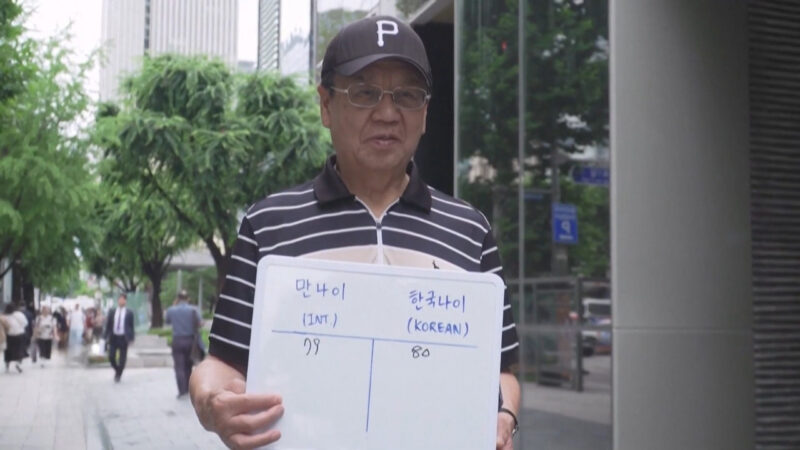
On June 28, 2023, millions of South Koreans became one or two years younger. Nobody discovered a miracle anti-aging treatment, of course. The government simply changed the way the country officially calculated people’s ages.
Under South Korea’s traditional system, babies were considered one year old at birth, and everyone gained another year on January 1, regardless of when their actual birthday fell.
The new law replaced that approach with the international standard, where people start at zero and grow a year older on their birthdays.
It sounds like a fairly straightforward administrative change. But South Korea’s relationship with age is considerably more complicated than that.
Age influences everything from how people address one another to how friendships develop. And while the government could change the law overnight, changing the social habits surrounding it was another matter entirely.
How Could Someone Have Three Different Ages?
View this post on Instagram
Before the reform, South Koreans commonly used three different methods of calculating age.
Traditional Korean age (se-neun nai) counted a baby as one year old at birth. Everyone then gained another year on January 1.
International age (man nai) started at zero and increased on each birthday, just as it does in most countries.
Calendar-year age (yeon nai) simply subtracted someone’s birth year from the current year, without considering whether their birthday had passed.
To see how strange this could get, imagine someone born on December 1, 2000.
On June 28, 2023, that person would have been:
- 22 years old under the international system.
- 23 years old under the calendar-year system.
- 24 years old under traditional Korean age counting.
Three perfectly legitimate answers to a question that should probably have only one.
The most extraordinary example involved babies born on December 31. Under the traditional system, a newborn was already one year old. When January 1 arrived a few hours later, that baby became two.
A child could therefore be considered two years old after being alive for less than 24 hours.
I can understand why this baffled foreigners. What’s more surprising is that South Koreans managed to navigate these overlapping systems for so long.
Why Did South Korea Count Age Differently?
The traditional Korean method developed from older East Asian age-counting customs, historically practiced in countries including China, Japan, and Vietnam.
Rather than measuring only the number of completed years since birth, these systems counted the calendar years a person had lived through.
Under this approach, birth marked the first year of life, and the arrival of a new year brought everyone another year of age.
Korea eventually adopted January 1 as the annual date for increasing ages, reflecting the country’s transition to the Gregorian calendar in 1896.
For generations, the practice became an ordinary part of Korean social life.
There’s even a familiar connection between growing older and tteokguk, the traditional rice-cake soup eaten during Korean New Year celebrations. Eating the soup is symbolically associated with gaining another year.
I find that detail particularly interesting because it shows how age counting can become intertwined with customs that have little to do with official documents.
And South Korea wasn’t simply clinging to an ancient practice while everyone else progressed. Other East Asian societies had also used similar systems before largely adopting birthday-based ages.
The unusual part was how long South Korea continued using traditional age counting alongside modern alternatives.
Official changes don’t always erase cultural traditions. Route 66 remains an American cultural landmark, decades after the government removed its federal highway status in 1985.
Why the Government Finally Changed the Rules
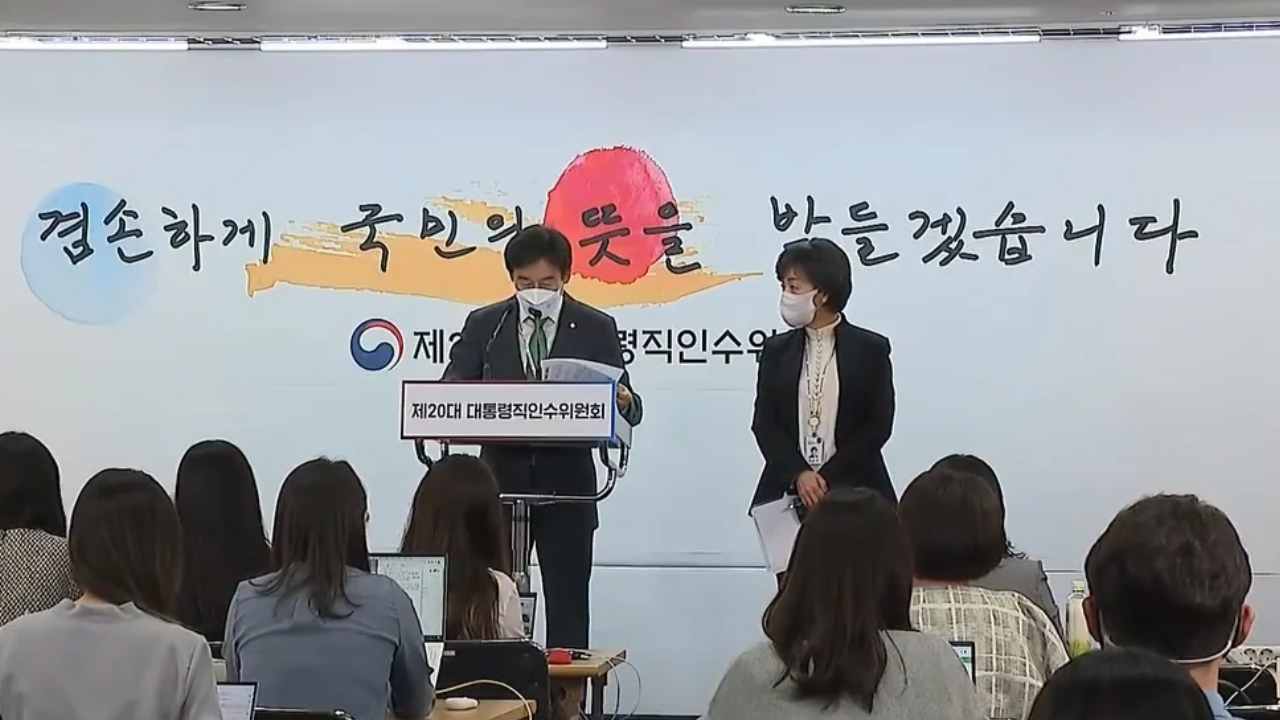
South Korea had actually used international age for many official purposes long before 2023.
Medical records, driving eligibility, and various legal matters already relied on birthdays. Meanwhile, everyday conversations generally followed traditional Korean age, while certain laws used calendar-year age.
It was an unnecessarily complicated arrangement.
Someone might use one age when speaking to friends, another when dealing with an institution, and a third when interpreting a particular legal requirement.
The confusion could also create disagreements over employment conditions, retirement provisions, and other age-related rules.
President Yoon Suk Yeol’s administration made standardizing the system a policy priority, arguing that the different calculations created unnecessary social and administrative costs.
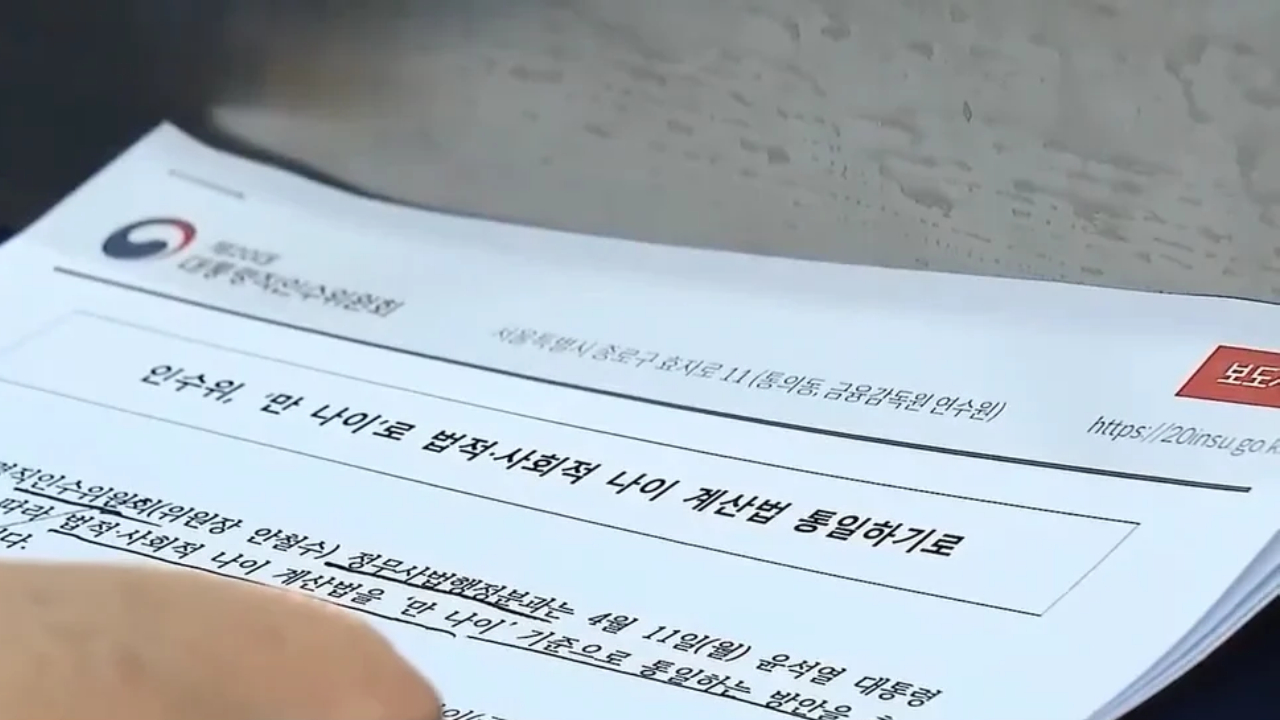
In December 2022, the National Assembly approved amendments to the Civil Act and the Framework Act on Administrative Affairs.
The changes took effect on June 28, 2023, establishing international age as the default for civil and administrative matters unless another law specifically provides otherwise.
The Ministry of Government Legislation also encouraged people to adopt the international system in everyday life.
Personally, I think the reform was sensible.
Traditions deserve consideration, but I don’t believe every traditional practice needs protecting when it creates unnecessary confusion. Standardizing legal ages seems a reasonable place to draw that line.
Not Everything Changed, Though
Despite the dramatic headlines, South Korea didn’t suddenly rewrite every age-related rule.
Several important exceptions remained, and some systems already used international age before the reform.
Drinking and smoking
South Korea retained its calendar-year approach for alcohol and tobacco purchases.
Under the Youth Protection Act, people become eligible to purchase these products on January 1 of the year they turn 19, rather than waiting until their actual nineteenth birthday.
Someone born in December can therefore become eligible nearly a year before turning 19.
The government specifically confirmed that the 2023 reform did not change these rules.
School enrollment
School entry rules also remained unchanged. Children generally enter elementary school in March of the year following the calendar year in which they turn six.
This keeps children organized into school-year groups rather than requiring their enrollment dates to follow individual birthdays.
Military service and pensions
Certain military conscription requirements continue to use calendar-year age, while pension eligibility and several other legal thresholds already relied on international age.
In other words, becoming younger on paper didn’t necessarily mean receiving retirement benefits later or postponing military obligations.
The reform simplified the general rules without eliminating every exception.
In South Korea, Age Is Also About Respect
This is where the story becomes much more interesting than a change in government paperwork.
In Korean society, age has traditionally played an important role in determining how people address and interact with one another.
The Korean language has different speech levels and forms of address that communicate politeness, familiarity, and social relationships.
Age isn’t the only factor involved. Professional position, family relationships, and social circumstances also matter. But knowing whether someone is older or younger often helps determine what language feels appropriate.
For example, Korean has different terms for an older male friend or sibling depending on the speaker’s gender.
A woman might address an older man as oppa, while a man might use hyeong. Similar distinctions exist for older women.
People born in the same calendar year have traditionally been treated as age peers, making it easier to establish informal friendships.
Now consider what happens when everyone begins using their exact birthday-based age.
Two people born just a few months apart in the same year might temporarily have different international ages. Under traditional Korean age counting, they would remain the same age throughout the year.
That raises questions about existing social expectations. Should people who have always regarded themselves as equals suddenly change how they address one another? I would argue that they shouldn’t have to.
Respectful language serves an important cultural purpose, but treating a difference of a few months as grounds for changing a relationship seems unnecessarily rigid.
Still, it’s not my place to suggest that Korean social conventions can simply be discarded because an outsider finds them complicated.
These relationships have their own histories and meanings, and changing them requires more than a revised number on a government form.
Did South Koreans Actually Welcome the Change?
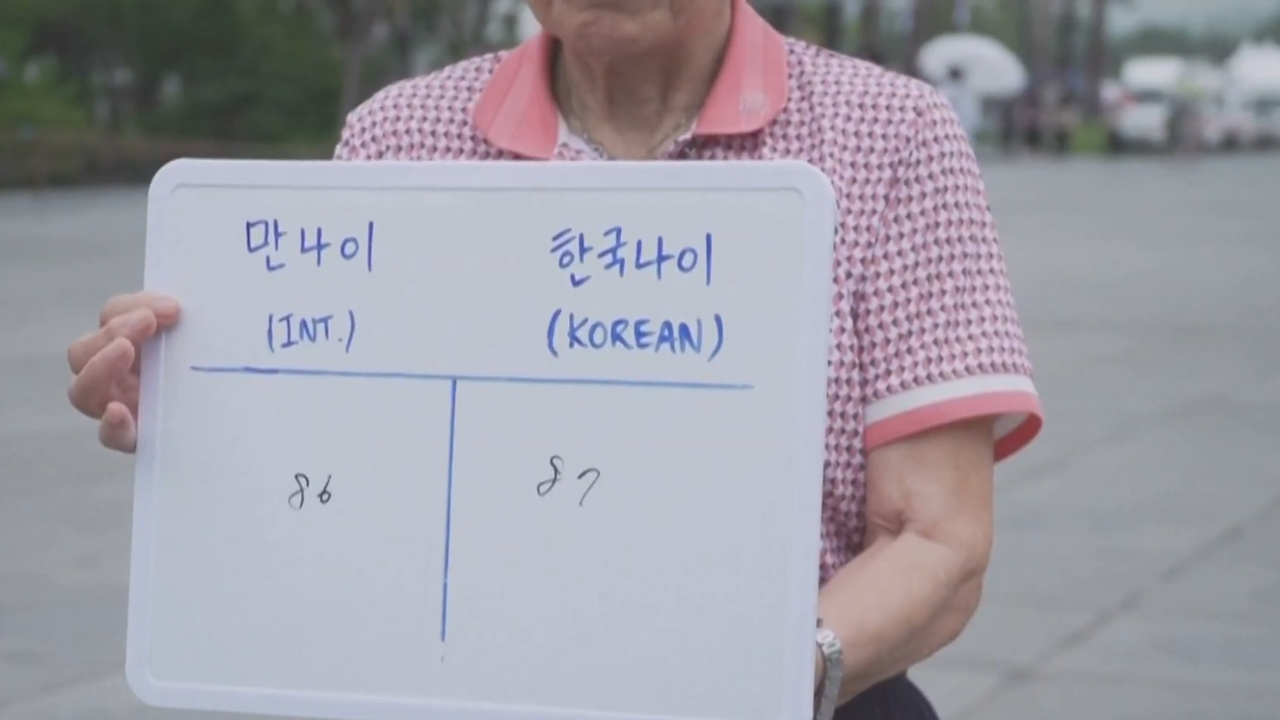
Many did.
A government survey conducted before the reform found that 86 percent of respondents intended to use international age in their daily lives after the legislation took effect.
And who wouldn’t appreciate being told they’re younger? But enthusiasm for a simpler system didn’t mean everyone immediately abandoned familiar habits.
In January 2024, The Korea Times reported that people were still encountering uncertainty about which ages to use in everyday conversations.
Some continued identifying themselves through traditional Korean age, particularly when dealing with friendships and social relationships.
The newspaper also reported that 88 percent of respondents in a later government survey viewed the reform positively.
That distinction matters.
People can support a legal change while continuing to follow customs they’ve practiced for decades.
And it’s perfectly possible for younger and older generations, different social groups, and individual families to approach the transition differently.
There’s no reason to assume that every South Korean has the same attachment to traditional age counting.
What the Change Reveals About Korean Culture
What interests me most about this story isn’t the mathematical difference between the systems, but the way something as ordinary as age can carry different meanings in different societies.
In much of the world, age is primarily understood as the number of years someone has lived.
In South Korea, it has also functioned as a useful social reference point, helping people establish relationships and navigate expectations about seniority.
That doesn’t make the traditional system inherently better or worse. It simply means the number has sometimes been doing more than one job.
And I think that’s why this reform is more culturally significant than it initially appears.
The government wasn’t merely correcting arithmetic. It was asking people to separate the practical measurement of age from longstanding social conventions surrounding it.
I also find it revealing that the change didn’t eliminate every older practice. Cultural habits rarely disappear just because legislation says they should.
Cultural identity can also change through deliberate choices, as it did in Leavenworth, Washington, after its Bavarian transformation.
South Korea’s age reform is a reminder that modernization doesn’t always require rejecting tradition entirely. Sometimes it means deciding which parts still serve a useful purpose.
The country may have become a year or two younger overnight in the headlines. But the more interesting change is how Koreans continue negotiating what age should mean in the first place.