

Every day, tourists gather around Rome’s Trevi Fountain, turn their backs to its enormous marble sculptures, and toss coins into the water. Some hope to return to Italy. Others wish for love, marriage, or whatever else they believe a little spare change might bring them.
By the end of the year, those wishes add up to an extraordinary amount of money. In 2025 alone, approximately €1.86 million was collected from the Trevi Fountain. That’s a remarkable sum for a tradition built around throwing away pocket change. And every euro has somewhere to go.
The coins belong to the City of Rome, which has an agreement to direct the proceeds to Caritas, a Catholic charitable organization helping people experiencing poverty and hardship throughout the Italian capital.
I find the whole arrangement fascinating. Rome has somehow turned one of tourism’s most sentimental rituals into a substantial source of funding for social services.
The people throwing those coins may never realize how much good their small gesture can accomplish.
How Much Money Is Actually Thrown Into the Trevi Fountain?
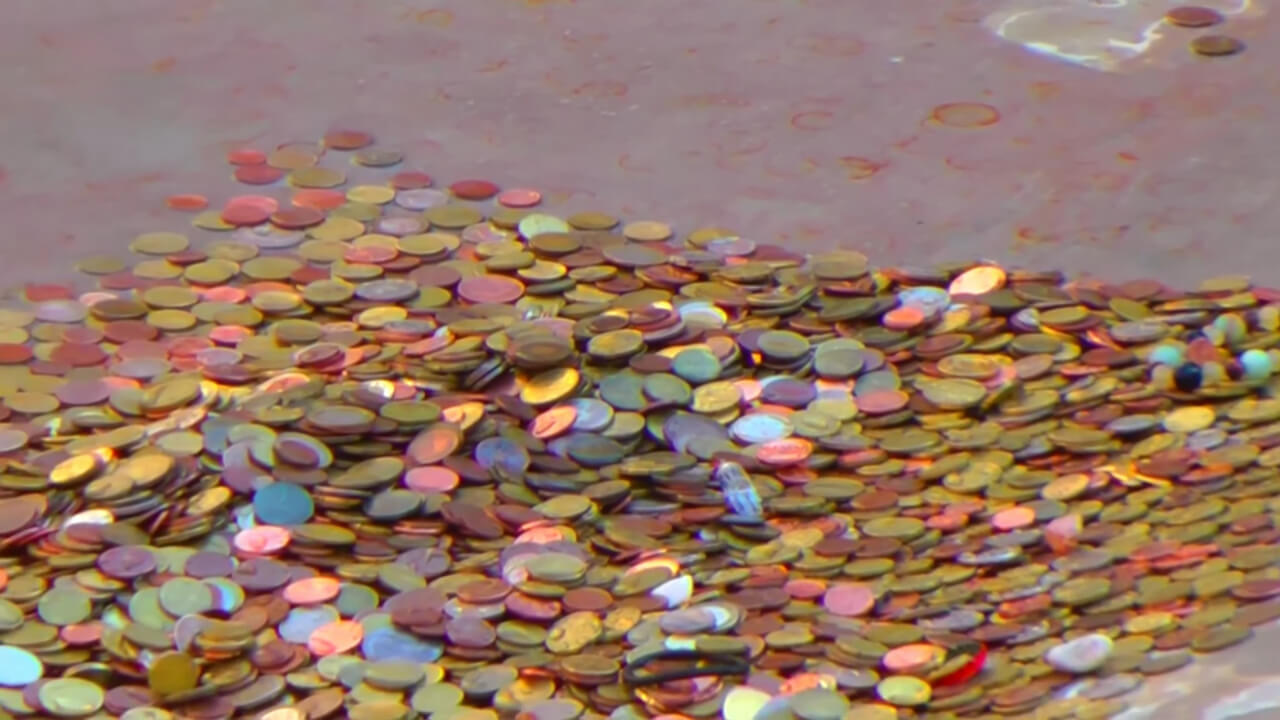
The figures are astonishing, particularly when you remember that most visitors throw in just one or two coins.
According to Caritas Rome’s June 2026 report, collections have reached the following amounts:
| Year | Money Collected |
| 2022 | Approximately €1.43 million |
| 2023 | Nearly €1.97 million |
| 2025 | Approximately €1.86 million |
The 2023 figure was particularly impressive, approaching €2 million from coins lying at the bottom of a public fountain.
These totals illustrate the extraordinary scale of the tradition. With millions of tourists visiting central Rome, even small individual contributions accumulate quickly. The fountain itself has been attracting visitors for centuries.
Completed in 1762, the elaborate Baroque monument features Oceanus standing in a shell-shaped chariot pulled by two sea horses. Its spectacular sculptures and cascading water have helped make it one of Europe’s most recognizable landmarks.
Of course, cinema gave the fountain another enormous publicity boost.
The 1954 film Three Coins in the Fountain helped popularize the coin-throwing tradition internationally. Federico Fellini’s La Dolce Vita, released in 1960, immortalized the fountain in another unforgettable scene.
Who Owns the Coins in the Trevi Fountain?
The money legally belongs to Roma Capitale, the municipal government of Rome.
The city’s longstanding arrangement directs the collected money toward charitable activities administered through Caritas.
On November 11, 2026, Rome officially renewed the agreement with the Vicariate of Rome for another three years.
The renewal confirmed that proceeds would continue supporting vulnerable individuals and families, particularly through charitable meal services and solidarity supermarkets. This is an arrangement I strongly support.
Tourists already contribute considerably to Rome’s economy through accommodation, restaurants, transportation, and sightseeing. Having a famous attraction generate additional resources for struggling residents seems entirely reasonable.
And the system has a particularly appealing feature: visitors participate voluntarily through a tradition they genuinely enjoy.
How Are the Coins Collected From the Fountain?
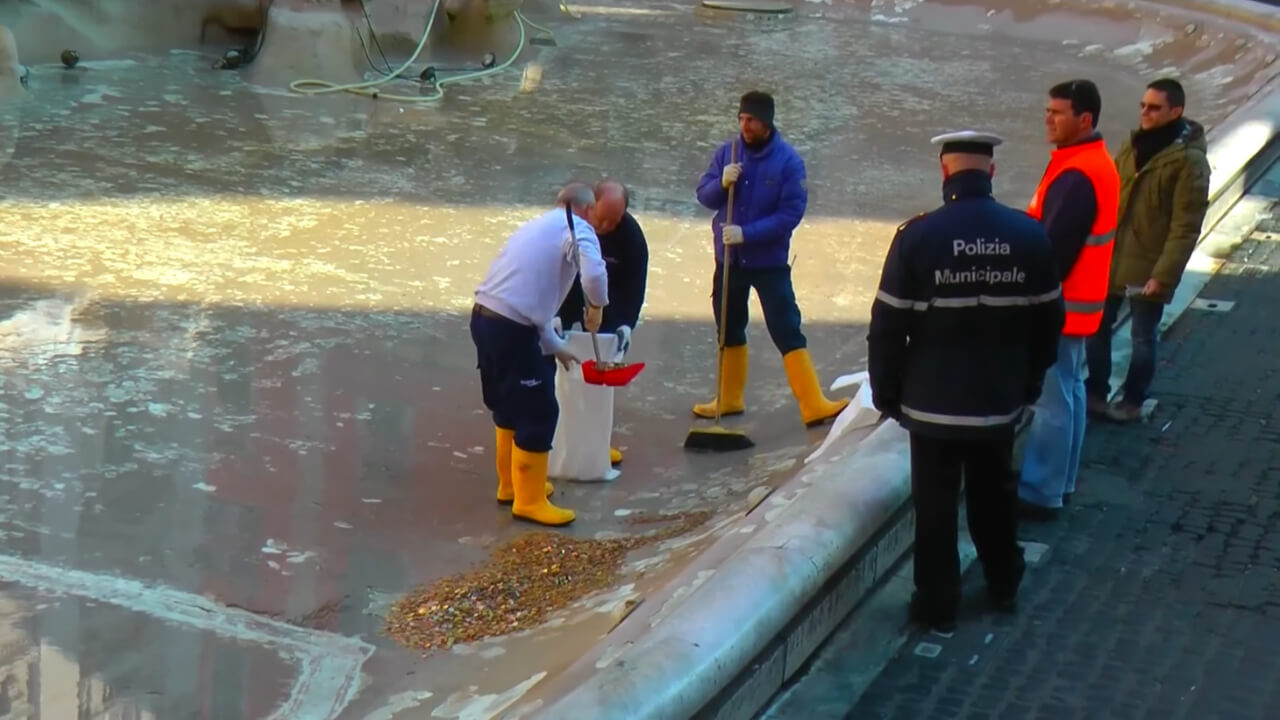
Retrieving hundreds of thousands of coins from an enormous historic fountain requires considerably more organization than you might expect.
In a 2024 Reuters investigation, workers from the utility company ACEA described collecting the coins twice a week.
The process involves several steps:
- Gathering the coins: Workers use long-handled brooms to sweep coins into concentrated piles along the fountain floor.
- Removing the money: Specialized suction equipment extracts the coins from the water.
- Transporting the collections: The recovered money is taken away for processing.
- Sorting and counting: Coins are dried, separated, counted, and prepared for conversion into usable funds.
The fountain also undergoes periodic cleaning and maintenance. And workers occasionally discover some truly bizarre objects among the accumulated change.
Reported finds have included jewelry, religious medals, dentures, and even umbilical cords.
I have several questions about how dentures end up in a fountain, and I’m fairly certain I would prefer to remain ignorant of the answers.
What Does Caritas Actually Do With the Money?
View this post on Instagram
This is where the story becomes genuinely interesting.
Caritas uses the proceeds to support a wide range of social programs across Rome. Its published financial overview for 2022–2025 provides unusually detailed insight into where the money goes.
Food for Struggling Families
Food assistance has consistently accounted for approximately 28% to 32% of the annual proceeds.
The funding helps support charitable dining facilities and a network of six solidarity supermarkets.
These supermarkets allow eligible families to obtain essential groceries through an assistance system, preserving some independence and choice.
Caritas reports that its solidarity supermarkets serve approximately 1,700 households, representing around 6,000 people.
Housing and Emergency Assistance
Another portion goes toward housing assistance and services for people facing homelessness.
Programs include temporary accommodation, help with rent and household bills, and supported housing initiatives designed to help people regain financial stability.
Healthcare, Children, and Elderly Residents
The money also contributes to medical and dental services, educational programs, and assistance for vulnerable children.
Services for elderly residents and people experiencing social isolation have become increasingly important.
In fact, the share of Trevi Fountain funds allocated to combating loneliness and social isolation increased from approximately 7% in 2022 to 23% in 2025.
Ever wonder what happens to the millions of coins tossed into Rome’s Trevi Fountain?
Twice a week, city workers dive in to collect over €1.5 million annually—all donated to charity.
[📹 amandarx21] https://t.co/hwfHskTnOb— Massimo (@Rainmaker1973) November 3, 2026
That last figure deserves attention.
Loneliness rarely appears in glossy travel brochures about Rome, yet it represents a serious problem for thousands of people living in the city.
The fountain’s charitable income helps address needs that visitors would otherwise never see.
Does Anyone Ever Try to Steal the Coins?
Unfortunately, yes. The enormous sums accumulating in the fountain have attracted thieves over the years.
Some have attempted to retrieve coins using magnets attached to long poles. Others have entered the water to collect the money themselves.
Rome prohibits taking coins from the fountain.
There are also strict rules against entering the water. According to the Trevi Fountain’s official visitor regulations, wading into the fountain can result in fines starting at €450.
And frankly, anyone trying to steal money earmarked for vulnerable families deserves little sympathy.
The fountain is already one of Rome’s most heavily visited public attractions. Protecting both the monument and its charitable collections is entirely justified.
Does the New €2 Trevi Fountain Entrance Fee Go to Charity?
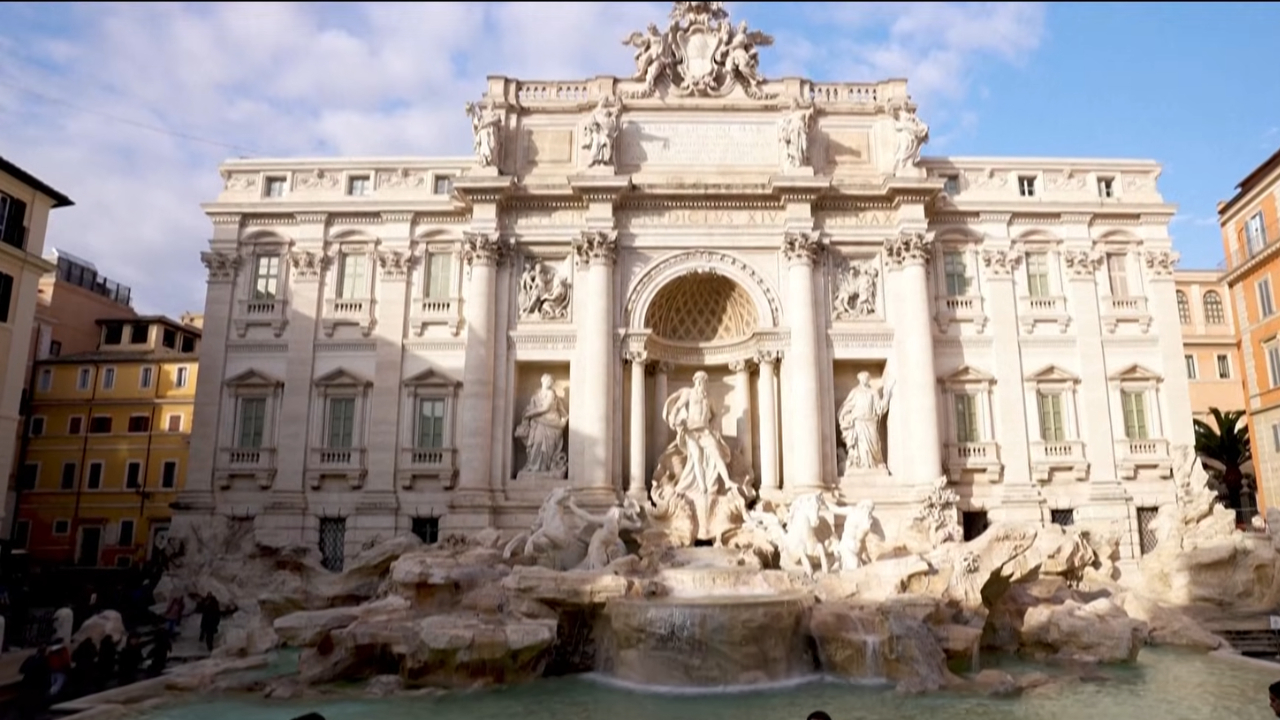
An important change arrived on February 2, 2026.
Rome introduced a €2 admission fee for non-resident visitors entering the fountain’s inner perimeter, the area closest to the monument.
The surrounding square remains accessible free of charge, allowing visitors to admire the fountain without purchasing a ticket.
According to Rome’s official tourism information, the entrance fee supports the protection and maintenance of the monument.
The admission revenue is therefore separate from the charitable collections made through the traditional coin toss.
Personally, I consider the admission charge a defensible decision, provided the city continues protecting free public views of the fountain.
Rome’s historic center is under enormous pressure from tourism, and maintaining major monuments requires money and careful visitor management.
The city has also confirmed that its longstanding charitable coin collection arrangement will continue.
Why Do People Throw Coins Into the Trevi Fountain Anyway?
According to the traditional legend:
- One coin promises a future return to Rome.
- Two coins are associated with finding romance.
- Three coins supposedly lead to marriage.
The familiar ritual involves standing with your back to the fountain and tossing a coin over your left shoulder using your right hand.
Naturally, there’s no evidence that the fountain can influence your romantic future or travel plans.
Still, I understand the attraction.
Travelers enjoy participating in rituals that give a place an identity. We’ve explored similar patterns at Kurionda, including how Shanghai’s recreated English town became a popular setting for wedding photographs.
People often bring their own hopes, expectations, and personal stories to famous destinations.
The Trevi Fountain has become an especially powerful example of that behavior.
The Best Part of the Trevi Fountain Tradition
What I appreciate most about the Trevi Fountain is the relationship between its visitors and the people who actually live in Rome.
Tourism can reshape entire communities. In our article about Leavenworth’s transformation into a Bavarian-style town, we explored how attracting visitors can dramatically change a local economy.
Rome faces its own challenges as one of the world’s most popular destinations. Its spectacular monuments draw millions of people, generating substantial economic activity alongside overcrowding and pressure on public spaces.
The Trevi Fountain’s coin collection offers a practical example of tourism revenue reaching residents who need assistance. Consider the journey of a single euro.
A visitor throws it into the fountain while wishing to return to Rome. A few days later, workers retrieve it, and eventually its value helps fund a meal, groceries, housing assistance, or another charitable service.
Multiply that process by millions of coins, and the results become substantial.
I think Rome has created one of the most worthwhile tourist traditions anywhere in Europe.
The legend may promise that throwing a coin will bring you back to the Eternal City. The money itself is already doing something valuable for the people who call it home.