
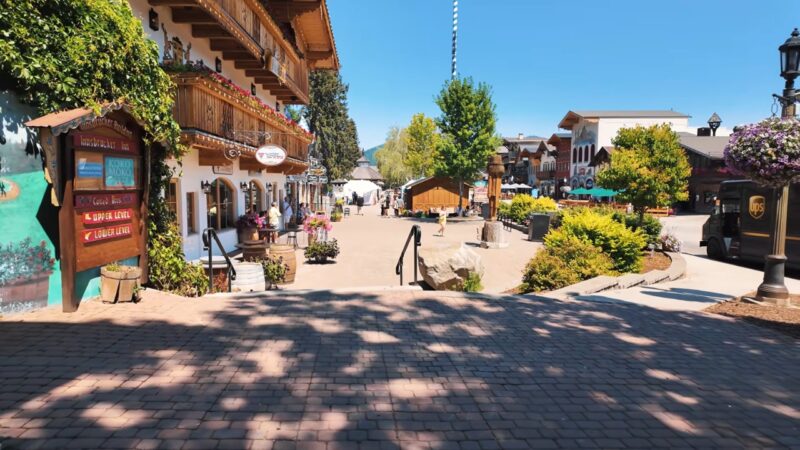
Leavenworth, Washington, has Bavarian-style buildings, German restaurants, flower-covered balconies, and enough Christmas decorations to make you forget you’re in the United States. Its downtown looks remarkably similar to an Alpine village in southern Germany.
Except Leavenworth has no meaningful historical connection to Bavaria.
It wasn’t founded by German immigrants. Its buildings don’t represent centuries of local Bavarian craftsmanship, and its German traditions weren’t inherited from generations of residents.
The town deliberately invented its Bavarian identity in the 1960s because its economy was falling apart.
I’ve always found that more interesting than the attractive buildings themselves.
Leavenworth is an extraordinary example of a community reinventing its identity to survive, although the transformation raises some uncomfortable questions about authenticity, cultural borrowing, and what happens when a town becomes more successful as a tourist attraction than as a place to live.
Before the German Facades, Leavenworth Was Falling Apart
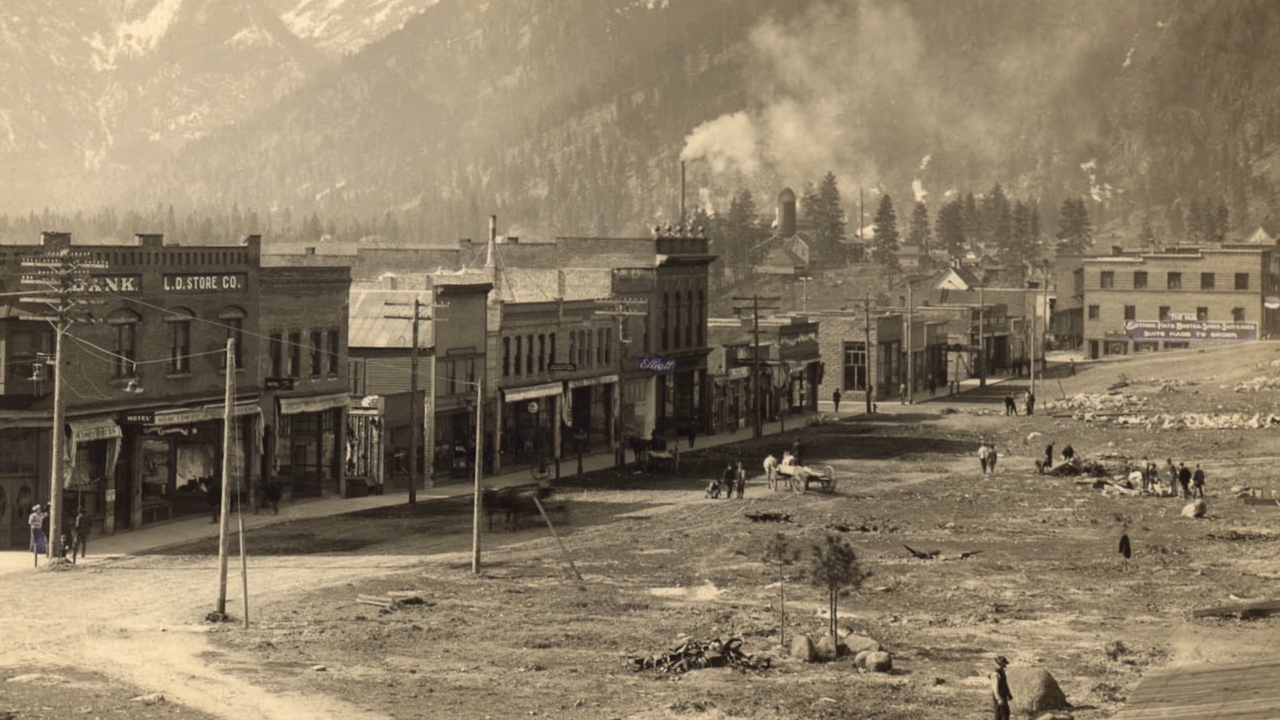
Leavenworth’s original history has very little to do with Germany.
The Wenatchee Valley was traditionally home to Indigenous peoples, particularly the Wenatchi, who relied on its rivers and salmon populations.
European American settlement expanded during the nineteenth century, and the arrival of the Great Northern Railway in 1893 transformed the area into a busy transportation and industrial center.
Logging became particularly important. In 1904, the Lamb-Davis Lumber Company established a large sawmill, bringing employment and investment.
For several decades, the town benefited from railway operations, timber processing, mining, and nearby agricultural activities.
Then almost everything began going wrong.
During the 1920s, the railway relocated important operations to Wenatchee, the sawmill closed, and the local economy deteriorated. The Great Depression only made matters worse.
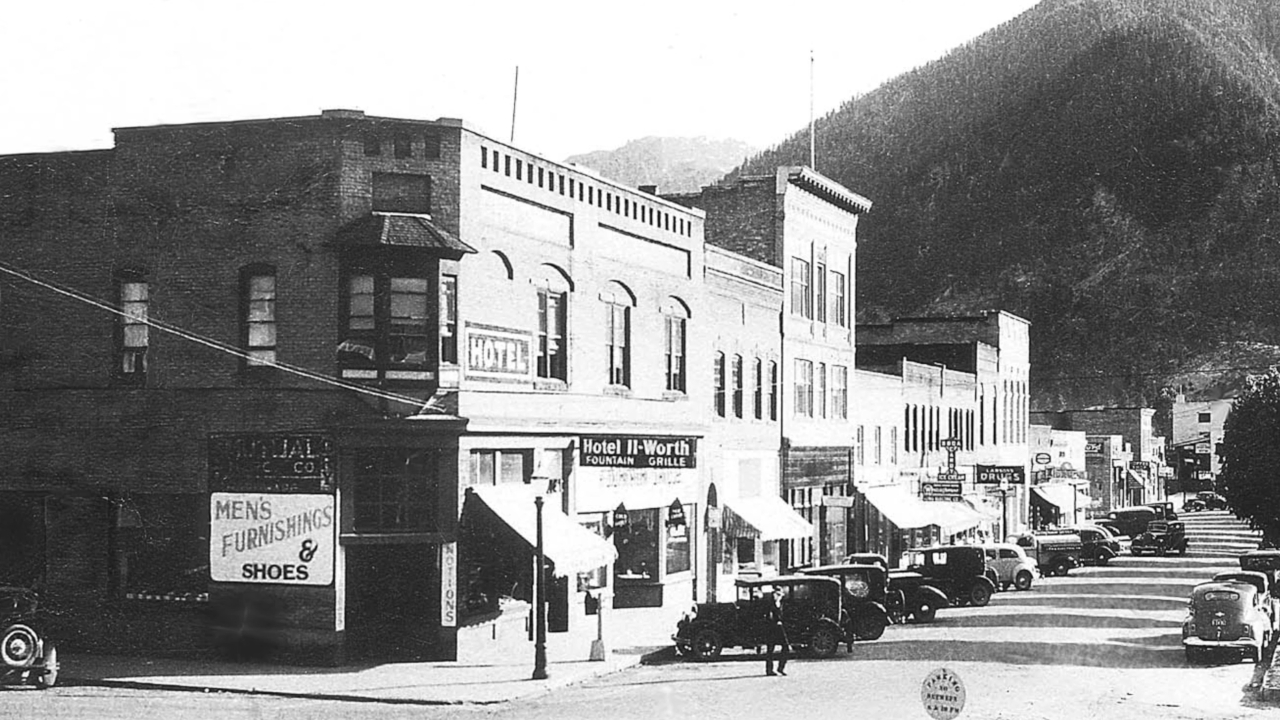
By the 1950s, Leavenworth had empty storefronts, deteriorating properties, limited employment, and a shrinking population.
A Town That Had Lost Its Purpose
The scale of the eventual transformation becomes clearer when you compare the town’s old economic identity with the one it created.
| Before the Reinvention | After the Bavarian Makeover |
| Railway and lumber industry dominated the economy | Tourism became the principal economic driver |
| Conventional American commercial buildings | Alpine-inspired storefronts and decorative facades |
| Empty businesses and declining employment | Shops, restaurants, hotels, and visitor services |
| Limited reasons for outsiders to stop | Festivals and attractions drawing visitors throughout the year |
The HistoryLink account of Leavenworth documents just how desperate conditions had become.
What strikes me is that the town hadn’t simply experienced a temporary downturn. The industries responsible for its existence were disappearing.
Whittier, Alaska, offers a different example of old railroad infrastructure put to new use. Its World War II rail tunnel was adapted for cars in 2000 and remains the town’s only road connection.
Leavenworth needed an entirely different reason for people to come there.
Not every former railroad town found a way back. Monowi, Nebraska, has just one resident, yet its tavern remains open after decades of population decline.
The Bavarian Experiment Started With a Roadside Restaurant
The idea didn’t originate with an elaborate municipal development plan.
It started with two businessmen, Ted Price and Bob Rodgers, who purchased a struggling roadside restaurant called Cole’s Corner Café in 1960.
The restaurant stood west of Leavenworth along Highway 2.
Rodgers had spent time in Bavaria during his military service after World War II. He remembered its mountain scenery and believed the surrounding Cascade Mountains offered a remarkably similar setting.
He suggested transforming the restaurant into a Bavarian-themed establishment.
Price initially favored a Native American theme, but Rodgers eventually convinced him.
They renamed the restaurant the Squirrel Tree, introduced Alpine decorations, German music, flowers, and waitresses wearing traditional-style dirndls.
The restaurant became successful. In 1961, they added a Bavarian-inspired motel.
I find the modest beginnings rather wonderful. There was no grand philosophical argument about cultural identity. Two entrepreneurs discovered that people enjoyed a particular atmosphere, and they wondered whether the idea could support something bigger.
Eventually, they began thinking about Leavenworth itself.
Convincing the Locals Was Another Matter
In 1962, Leavenworth’s Chamber of Commerce contacted the University of Washington for assistance with community revitalization.
View this post on Instagram
The resulting initiative was called Project LIFE, meaning Leavenworth Improvement for Everyone.
Price became chairman of its tourism committee and argued that the town should concentrate on attracting visitors rather than chasing another industrial employer.
Some residents were skeptical.
That seems entirely reasonable to me. Imagine being told that your struggling hometown could survive if everyone remodeled their businesses to resemble buildings from another country.
It must have sounded fairly ridiculous.
Yet Price and Rodgers persisted, encouraging business owners to consider the possibilities.
The University of Washington’s Price and Rodgers archives preserve the history of their efforts, including the resistance they encountered as outsiders.
The two men were also life partners, although they did not publicly come out as a gay couple until years after leaving Leavenworth.
Their role was sometimes minimized in later accounts of the town’s transformation.
I think that’s an important detail. Communities understandably like to celebrate their collective achievements, but doing so shouldn’t erase individuals whose ideas made those achievements possible.
Turning an Ordinary Main Street Into an Alpine Village
The architectural transformation began in earnest in 1965.
One of the earliest projects involved the Chikamin Hotel, which had been damaged by fire. Its owner, LaVerne Peterson, agreed to remodel it in the new style, reopening it as the Edelweiss Hotel.
Other property owners followed.
Designers Earl Petersen, who had worked on the Danish-themed town of Solvang, California, and German-born Heinz Ulbricht helped establish a consistent appearance.
What Actually Made the Buildings Look Bavarian?
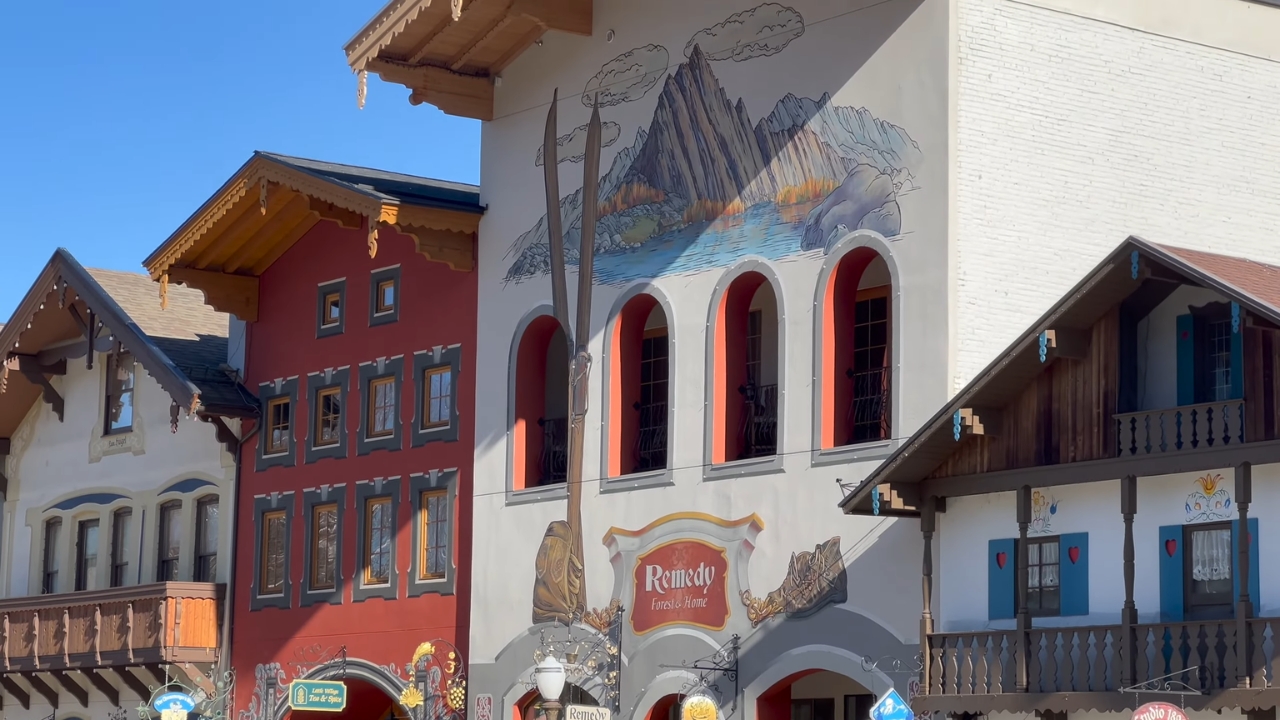
The designers drew on recognizable Alpine architectural features rather than reproducing individual historic buildings.
That sets Leavenworth apart from China’s replica of the Austrian village of Hallstatt, where developers copied an actual European town rather than adopt a broader architectural style.
China’s copy of Paris offers another example, with French-style apartments and an Eiffel Tower replica in Hangzhou.
Shanghai’s Thames Town follows a comparable idea, with English-style houses and an imitation Gothic church.
Several details became particularly important:
- Decorative timberwork: Wooden patterns across facades created the impression of traditional timber-framed construction.
- Wide roof overhangs: A feature associated with Alpine buildings, where roofs help protect walls from heavy precipitation.
- Painted murals: Decorative wall paintings borrowed from traditions found in Bavarian and other Alpine communities.
- Balconies and flower boxes: These added visual detail and helped create the appearance of a traditional village streetscape.
But there is a difference between architecture developed through centuries of local history and architecture assembled to create a particular impression.
The traditional underground homes of Matmata offer an example of architecture shaped by local climate and generations of family life.
The Society of Architectural Historians, in its architectural account of Leavenworth, identifies the town’s eclectic combination of Alpine design elements.
Personally, I find the transformation interesting precisely because it is artificial.
Many historic Bavarian buildings reflect particular construction techniques, economic circumstances, and regional customs. Leavenworth borrowed the outward appearance without inheriting those circumstances.
It’s closer to theatrical architecture than historic preservation.
A very different approach can be seen at Shuri Castle in Okinawa, where the restored royal palace represents centuries of Ryukyuan history rather than an imported architectural style.
And that’s not necessarily an insult.
The designers created a coherent environment that made ordinary commercial buildings more visually interesting. I can appreciate that achievement without pretending the resulting streetscape represents authentic Bavarian history.
Why Bavaria Was a Surprisingly Sensible Choice
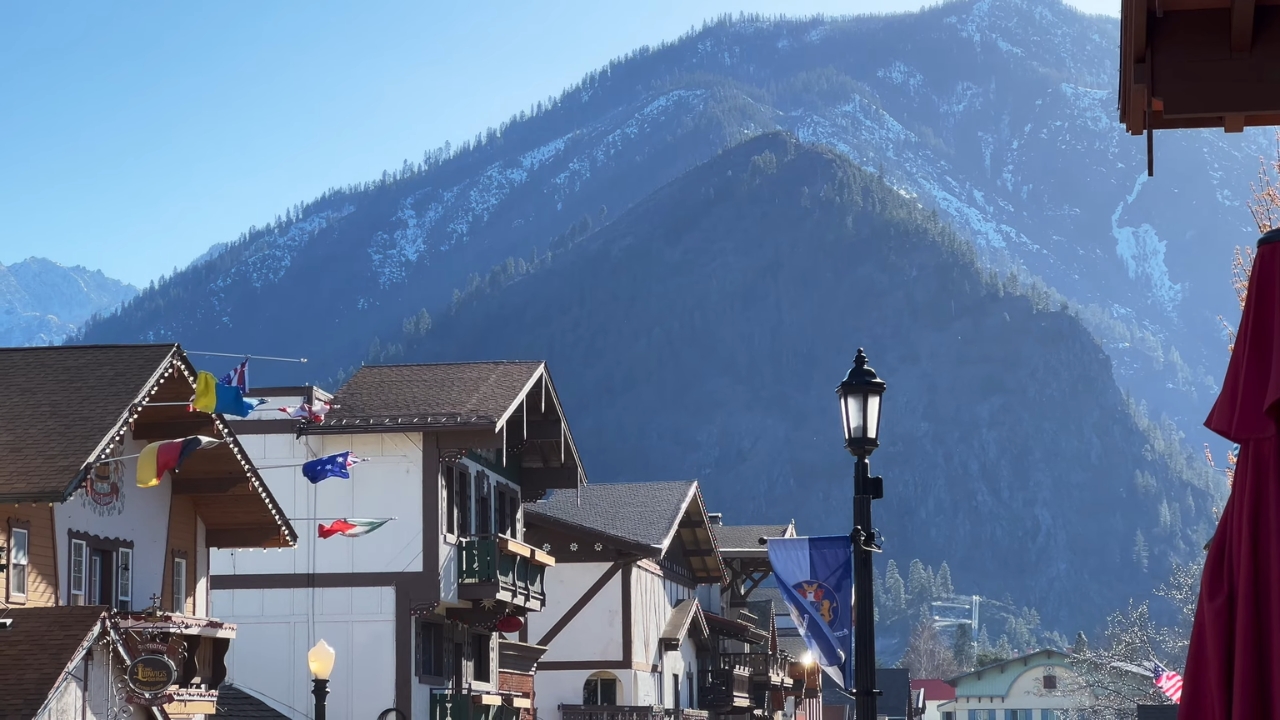
Leavenworth could have chosen almost any recognizable cultural theme.
Its geographical setting made Bavaria especially convincing.
The Cascade Mountains provided a natural backdrop of steep peaks, forested slopes, and snowy winters. Visitors could look beyond the decorated storefronts and see scenery resembling the landscapes of Alpine Europe.
The town also studied Solvang, California, which had successfully developed a Danish architectural identity.
However, Solvang had been founded by Danish immigrants. Leavenworth lacked an equivalent Bavarian connection.
Its chosen identity came from the landscape, not its population.
The environment has shaped other unusual towns in more direct ways. Coober Pedy in Australia developed underground homes because the surrounding desert makes conventional housing difficult to keep cool.
I would argue that this distinction makes Leavenworth more culturally interesting, not less.
The community wasn’t trying to preserve something that had disappeared. It was consciously creating something new.
We generally associate cultural identity with inherited traditions, shared experiences, and historical continuity. Leavenworth demonstrates how identity can also emerge from collective decisions about appearance, business, and public life.
Whether we call that cultural reinvention or sophisticated marketing depends partly on how generously we’re feeling.
I suspect it’s both.
Festivals Helped Turn the Experiment Into an Economy
Buildings alone couldn’t provide steady employment or persuade tourists to return year after year.
The community needed activities.
Leavenworth began organizing seasonal celebrations, including the Autumn Leaf Festival, which started in 1964, before the major architectural transformation was completed.
Other events followed, strengthening the town’s German and Alpine image.
Maifest, Oktoberfest celebrations, seasonal concerts, and elaborate Christmas festivities eventually became important parts of its visitor economy.
Restaurants, hotels, gift shops, and recreational businesses benefited from the growing attention.
Leavenworth also had something that no architectural makeover could manufacture: spectacular outdoor scenery.
The surrounding mountains offered hiking, skiing, climbing, rafting, and other recreational opportunities.
I consider that combination the real reason the experiment succeeded.
A decorative building might persuade someone to stop for a photograph. A destination offering food, activities, festivals, accommodations, and outdoor recreation gives people several reasons to return.
The Bavarian identity attracted attention. The broader visitor economy kept the transformation financially useful.
The Reinvention Worked Almost Too Well
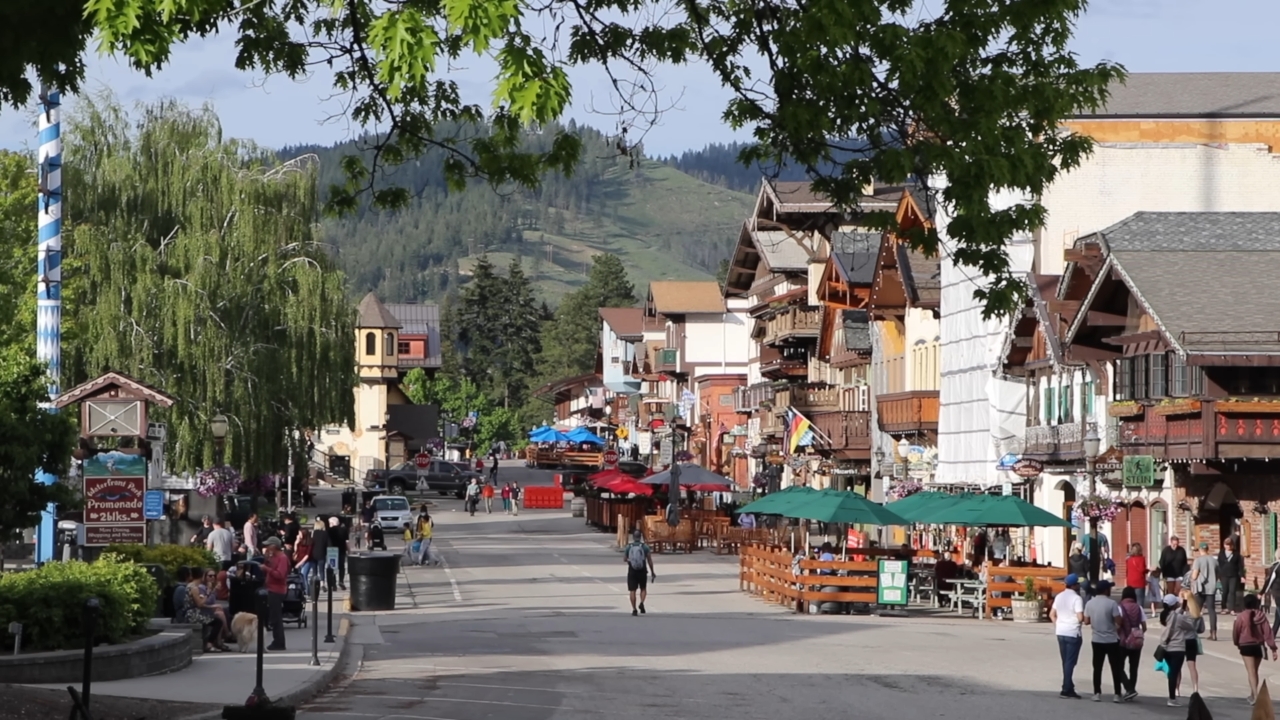
Leavenworth eventually became one of Washington’s most recognizable tourist destinations.
According to a 2025 Association of Washington Cities report, the town attracted approximately 3.6 million visitors in 2023.
For a small community, that’s an extraordinary number.
The makeover generated employment, investment, and commercial activity that would have been difficult to imagine during the town’s industrial decline.
However, success created an entirely new collection of problems.
Tourism Doesn’t Automatically Make a Town Affordable
Leavenworth now faces significant housing pressures.
According to the city’s housing planning research, between 2010 and 2023:
- Home sale prices increased by approximately 132%.
- Area median income increased by approximately 68%.
Those figures reveal a serious imbalance between housing costs and local earning power.
Tourism isn’t the only reason. Second homes, limited available land, and broader real estate trends also influence the market.
Still, the consequences are particularly difficult for employees working in hospitality, retail, and other visitor-dependent industries.
There’s a contradiction here that I find difficult to ignore.
Leavenworth reinvented itself because residents needed employment. Decades later, some of the people supporting its successful tourism economy struggle to afford housing in the community.
I wouldn’t call that a failure, but it’s certainly a reminder that economic growth and community well-being aren’t interchangeable.
Rome offers an interesting alternative. The coins donated at the Trevi Fountain help fund food assistance, housing support, and other services for local residents.
What Happened to Leavenworth’s Original Identity?
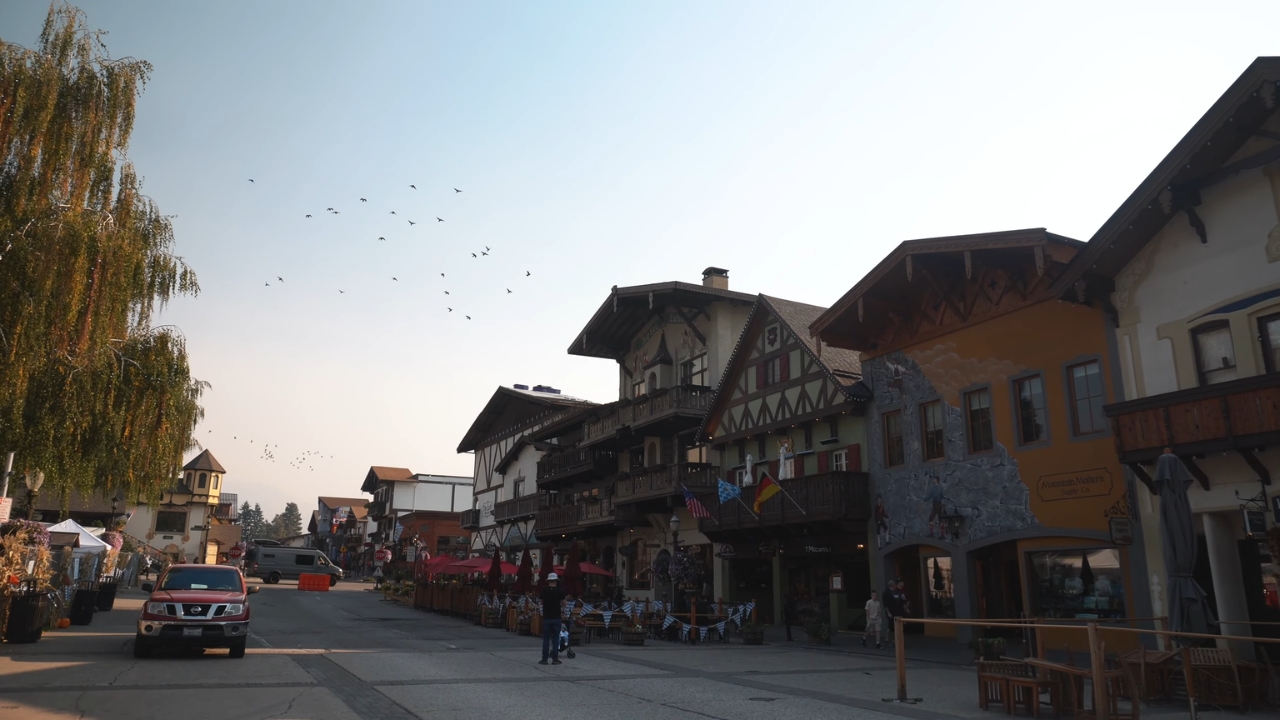
The Bavarian theme has become so dominant that visitors can easily overlook the town’s earlier history.
A comparable contrast exists on Norway’s Atlantic Road, whose famous bridge draws tourists to a route originally built to connect coastal communities.
Its Indigenous heritage, railway development, lumber industry, and economic collapse are all genuine parts of Leavenworth’s past.
The Alpine storefronts came much later.
Communities along historic Route 66 took a different approach, preserving roadside businesses and landmarks to attract visitors back to the old highway.
That doesn’t make the town’s current identity illegitimate. Cultures change, communities adopt new traditions, and architectural styles travel across borders constantly.
South Korea offers another example of how cultural traditions adapt. Its 2023 age reform changed official ages overnight, but older customs related to seniority remained part of everyday life.
What bothers me is the possibility of the invented identity replacing public awareness of the real history.
A visitor who leaves believing Leavenworth was originally a German settlement has misunderstood something fundamental.
The town’s historical institutions, including the Greater Leavenworth Museum, help preserve the stories behind its unusual appearance.
And those stories deserve at least as much attention as the Christmas lights and decorative balconies.
Leavenworth’s Real Achievement Wasn’t Pretending to Be German
@worldview360.1 🇺🇸🏔️ America’s Hidden German Village | Leavenworth🍺 #america #leavenworth #hiddenvillage #germanvillage #uku ♬ original sound – World View360
I don’t consider Leavenworth an authentic Bavarian village, and I don’t think it needs that label to justify its existence.
Its architecture is borrowed. Its modern German-themed celebrations were deliberately developed. Its identity is, in many respects, a commercial invention.
Yet the community’s determination to survive was completely genuine.
Residents invested money they couldn’t easily afford to lose, business owners took enormous risks, and individuals with unconventional ideas helped turn an economically exhausted town into a thriving destination.
That achievement deserves recognition, even alongside legitimate criticism of the housing pressures and commercial excesses that followed.
For me, Leavenworth’s most interesting story isn’t about Bavaria at all.
It’s about an American town that lost the economic foundations of its existence, invented an entirely new identity, and discovered that the invention could become more valuable than the industries it replaced.