
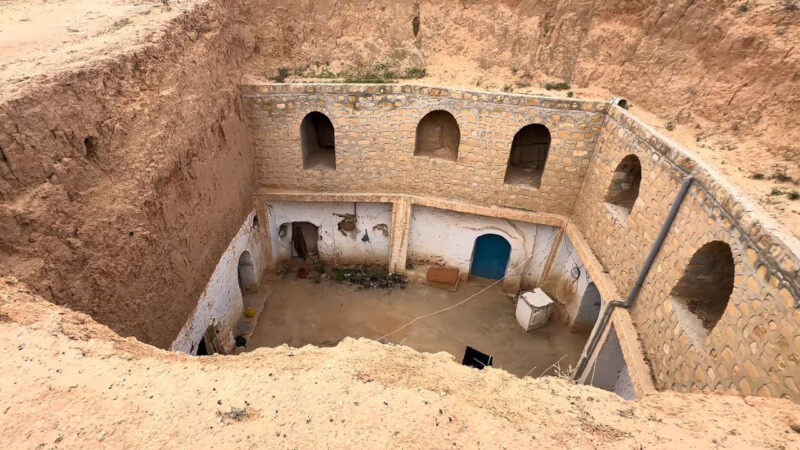
In Matmata, southern Tunisia, you can walk across a dusty hillside without realizing there are entire homes beneath your feet. Their bedrooms, kitchens, and living spaces are carved into the earth, arranged around deep circular courtyards open to the sky.
Some of these remarkable underground houses have sheltered Amazigh (Berber) families for generations. Others have been adapted for accommodation, museums, and tourism.
Visits to underground houses are part of Matmata’s tourism tradition, although access to individual properties needs to be confirmed.
Several named sites appear in travel guides, and organized excursions sometimes include traditional homes. Opening arrangements, admission charges, and visitor access can vary.
Matmata deserves a proper visit. I find the idea of traveling all the way into southern Tunisia for a ten-minute Star Wars photo stop rather depressing. The underground architecture here is extraordinary, and its history deserves considerably more attention.
Which Underground Houses in Matmata Can Tourists Visit?
Travel guides document several underground properties associated with tourism. The following are worth investigating when planning a visit.
Their inclusion here reflects their documented history as visitor destinations. Current access to each property remains unconfirmed.
1. Hotel Sidi Driss: The Famous Star Wars House
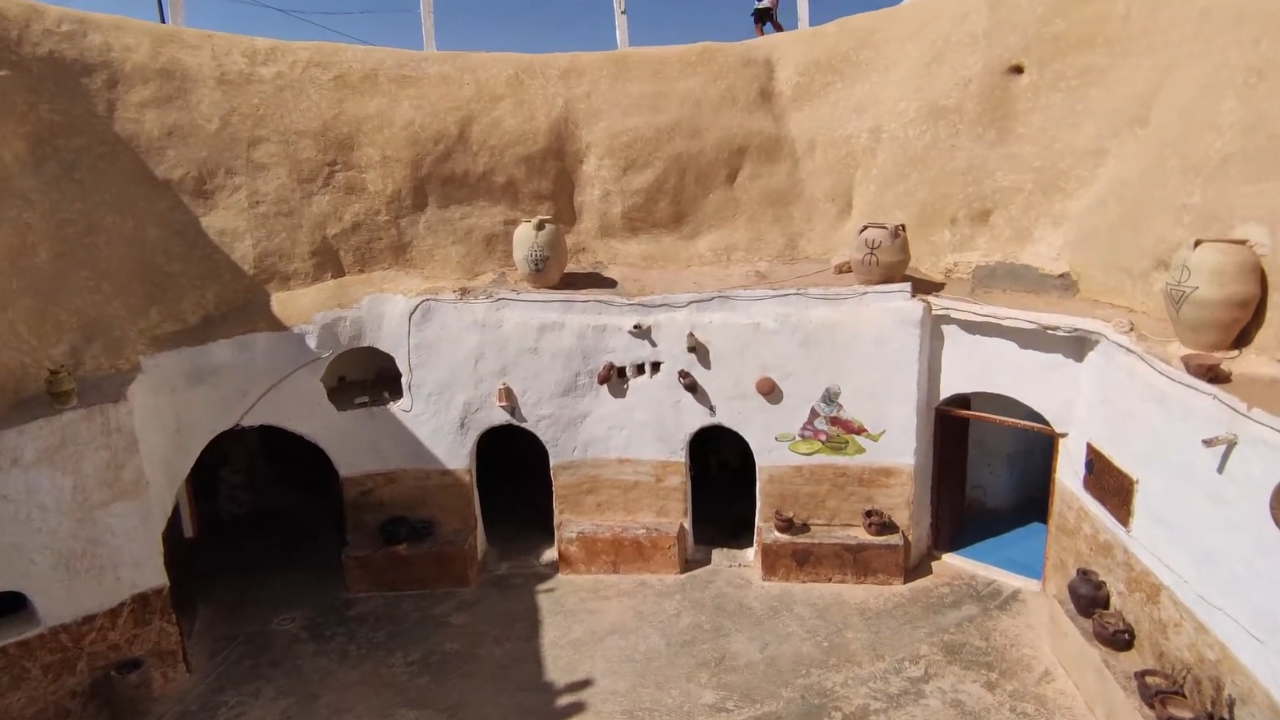
Hotel Sidi Driss is Matmata’s best-known underground building, largely because George Lucas used it as the interior of Luke Skywalker’s family home in the original Star Wars film.
The property contains five interconnected sunken courtyards, with underground rooms and passageways carved into the surrounding rock.
Sidi Driss has a long history as a basic guesthouse and tourist attraction. Its association with the films has made it one of the most recognizable locations in southern Tunisia.
The Matmata visitor guide discusses the property and its cinematic significance. Travelers interested in entering the courtyards or booking accommodation should confirm the arrangements directly before visiting.
I would put Sidi Driss at the top of my list. Standing inside a real building that helped define the appearance of an imaginary planet sounds like a terrific experience.
The building’s greatest achievement happened long before Hollywood arrived. Generations of local people developed a practical architectural solution that eventually caught the attention of one of cinema’s most influential directors.
Access information: Historically operated as a guesthouse and visitor attraction. Current entry arrangements require confirmation.
2. Maison Traditionnelle: A Traditional Underground Home
View this post on Instagram
Maison Traditionnelle appears in travel guides as a tourist-oriented example of Matmata’s underground domestic architecture.
Descriptions of the property highlight its central courtyard, carved rooms, and traditional household activities.
Some travel accounts also describe demonstrations involving weaving and olive processing.
The Matmata visitor guide identifies Maison Traditionnelle as a local attraction. However, published descriptions do not establish whether particular activities or rooms will be accessible on a specific visit.
This is precisely the kind of place I would prioritize when arranging an itinerary. Understanding how families organized their lives underground interests me far more than collecting photographs of unusual doorways.
The architecture becomes considerably more meaningful when someone explains the purpose of the individual spaces.
Access information: Documented as a tourist-oriented traditional house. Current entry arrangements and any demonstrations require confirmation.
3. Dar Khadija Museum: A Look at Underground Domestic Life
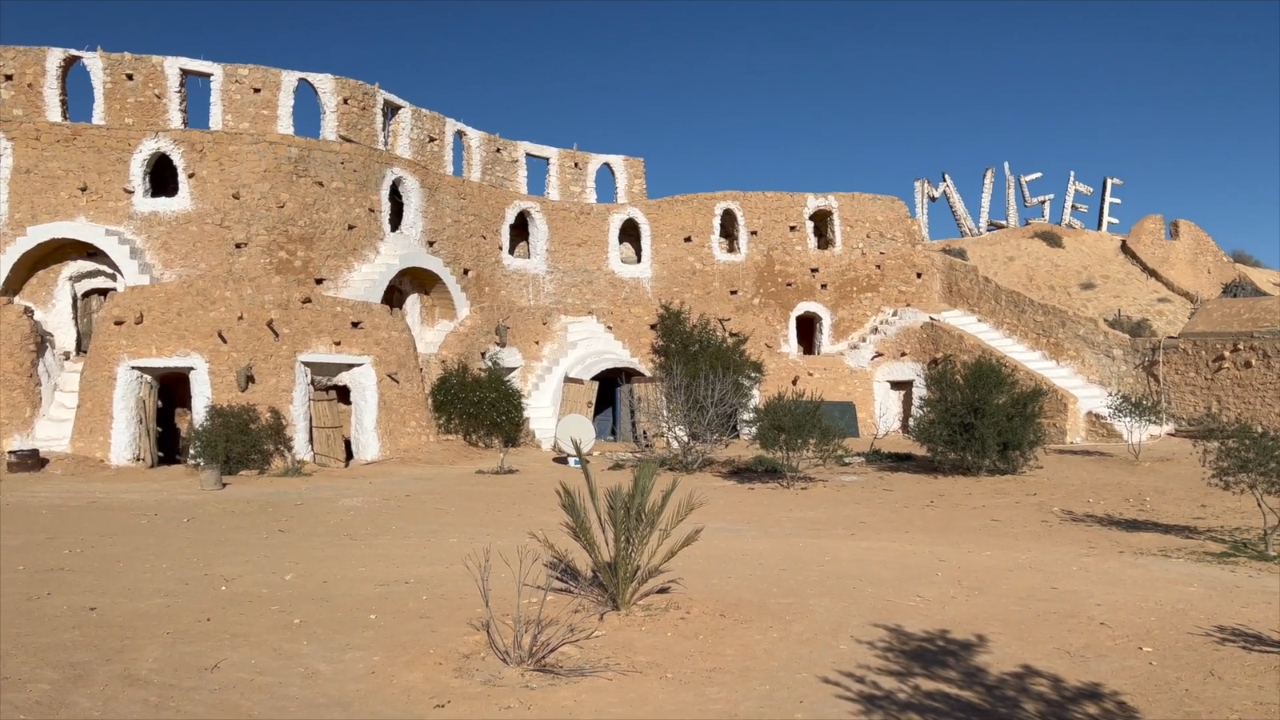
Dar Khadija is a documented museum associated with Matmata’s traditional underground housing.
Descriptions of the museum mention furnished underground rooms and displays explaining how these unusual dwellings were constructed and used.
A cave-site visitor directory identifies Dar Khadija and provides historical visitor information. Those details should be treated as reference material until current arrangements can be established.
For anyone genuinely curious about Matmata’s engineering, a dedicated museum would be high on my list.
There is something remarkable about a house whose surrounding earth provides insulation, whose courtyard supplies daylight, and whose layout accommodates an entire household beneath the surface.
Access information: Documented museum. Current opening status, hours, and admission arrangements are unconfirmed.
4. Dar Taoufik: A Historic Troglodyte House
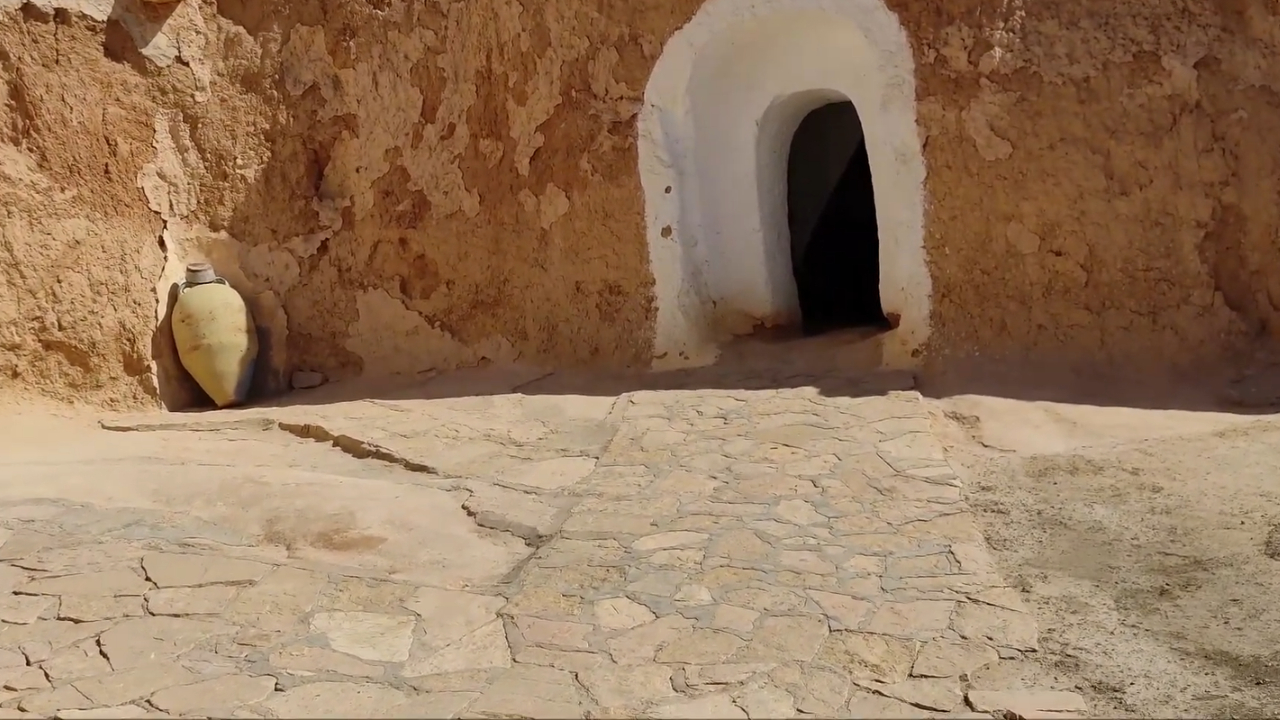
Dar Taoufik is another underground property described in travel literature.
The French travel guide Petit Futé identifies it as an open-air museum occupying a traditional troglodyte residence.
The guide describes the property’s historic architecture and hospitality associated with visits.
That makes Dar Taoufik an interesting possibility for travelers who want to understand the practical and cultural details of underground living.
I would happily devote time to a property where someone could explain how the rooms were used and what daily life involved.
Access information: Documented in travel literature as a visitor attraction. Current access, admission conditions, and availability require confirmation.
Can You Visit Underground Houses Where People Still Live?
Travel accounts describe visits to privately occupied underground homes in Matmata. These arrangements depend entirely on the residents.
Some accounts mention small payments, hospitality, and opportunities to observe traditional household spaces. None of this should be assumed for a particular property.
There is no reason to expect every inhabited underground house to welcome tourists.
I have a strong objection to visitors treating private homes as public exhibits. Imagine strangers walking into your kitchen, photographing your possessions, and expecting you to smile because your home happens to be architecturally unusual.
Ask permission before entering and before photographing anyone. Agree on any payment beforehand, and respect the areas your host wants to keep private.
A local guide or established tour operator may be able to arrange a visit with a willing household. Confirm that the visit has been agreed upon by the residents.
Why Were Matmata’s Houses Built Underground?
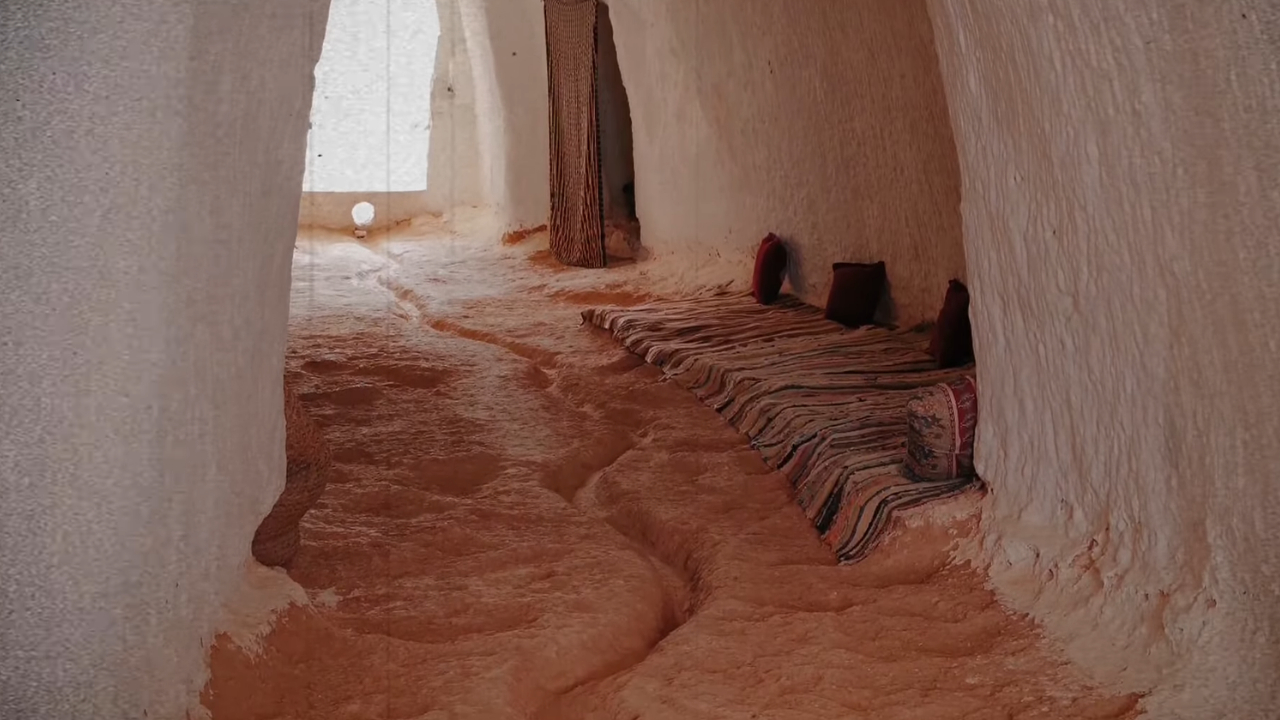
The design is an ingenious response to southern Tunisia’s demanding climate.
Traditional builders excavated deep circular pits into the relatively soft ground and carved rooms horizontally into their walls.
An entrance passage connects the courtyard with the surface. The open courtyard provides natural light and ventilation, while the surrounding earth helps moderate indoor temperatures.
The Tunisian National Tourist Office describes these homes as a distinctive architectural tradition of the Matmata region.
The arrangement is fascinating because every major feature serves a purpose.
Readers familiar with our Coober Pedy travel guide will recognize the same underlying intelligence. In the Australian outback, underground homes also provide relief from extreme heat.
I think both places expose a serious weakness in how we discuss architecture. We spend an extraordinary amount of time admiring spectacular buildings and far too little appreciating homes designed around the realities of their environment.
Matmata’s underground houses belong among the world’s most impressive examples of climate-conscious traditional construction.
How Much Does It Cost to Visit?
Admission arrangements vary between properties. Travel guides have described modest entry fees at some tourist-oriented houses and contributions to residents during private visits.
Such reports are useful for understanding how tourism has operated in Matmata, although they cannot establish current prices.
Bring small cash notes and coins. Ask about the price before entering any property where a visit has been arranged.
I would also keep some money available for locally produced crafts or refreshments. Supporting households and craftspeople who preserve these traditions seems a worthwhile way to spend part of a travel budget.
Rome offers another example of tourism that benefits residents. Coins tossed into the Trevi Fountain help finance food assistance and social services for people in need.
How to Get to Matmata
Matmata is approximately 40–45 kilometers southwest of Gabès, in southern Tunisia.
The journey from Gabès generally takes around 45 minutes by road. Travelers staying on Djerba can also arrange excursions, typically involving around two hours of driving each way, depending on their departure point.
The roads into Matmata are paved, so reaching the town doesn’t normally require a four-wheel-drive vehicle.
A rental car, private driver, or organized excursion offers flexibility.
Shared taxis, known locally as louages, may also be an option from Gabès, although departure arrangements should be checked locally.
How Long Should You Spend in Matmata?
I recommend allowing at least half a day, particularly if you want to understand the architecture and explore the surrounding landscape.
The exact itinerary should depend on which properties confirm access.
My priorities would be:
- Enquire about visiting Hotel Sidi Driss and its famous film location.
- Check whether Maison Traditionnelle, Dar Khadija, or Dar Taoufik can accommodate visitors.
- Arrange a traditional home visit through a guide or directly with a willing resident.
- Spend time examining the landscape and the visible features of Matmata’s underground settlement.
For a longer excursion, consider nearby Tamezret, a traditional hilltop village known for its Amazigh heritage.
Spring and autumn generally offer pleasant conditions for exploring. Bring comfortable footwear, drinking water, and sun protection. Passageways and steps inside traditional underground properties may be uneven, making accessibility an important consideration.
Is Visiting Matmata’s Underground Houses Worth It?
@startupchina 🇹🇳 In Matmata, Tunisia, people have lived in underground homes for centuries, with rooms carved into the earth to escape the extreme heat! #Tunisia #Matmata #Architecture #AmazingPlaces #Travel ♬ original sound – Startup China
Absolutely. I would rank Matmata among southern Tunisia’s most compelling destinations for anyone interested in architecture, history, or unusual places to live.
The Star Wars connection provides an entertaining reason to seek out Hotel Sidi Driss. The surrounding village offers an opportunity to understand an extraordinary building tradition that has survived for generations.
And that’s where I think tourists should spend their attention.
An underground courtyard is impressive in a photograph. Learning how the rooms connect, why the houses were excavated, and how families organized their daily lives provides the deeper understanding that makes the journey worthwhile.
Give Matmata the time it deserves, and arrange any interior visits before relying on them as part of your itinerary. Its extraordinary architecture and cultural history make this one of Tunisia’s most fascinating settlements.