
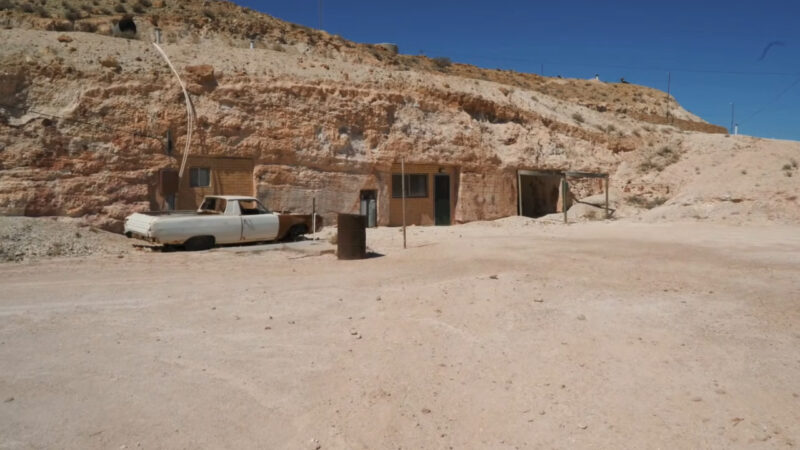
Drive through Coober Pedy in South Australia, and you might wonder why anyone decided to build a town here. The landscape is almost treeless, the ground is littered with piles of excavated rock, and summer temperatures can climb above 40°C (104°F). From the road, it looks like a mining settlement that someone forgot to finish.
But there’s something you can’t see from your car. Much of Coober Pedy’s residential life happens underground.
People sleep in bedrooms carved into sandstone. Churches have been excavated beneath hillsides. Hotels offer rooms without conventional windows, and some homes have ventilation pipes sticking out of the ground where you’d normally expect a roof.
I find Coober Pedy more interesting than plenty of Australia’s famous coastal destinations. There are certainly prettier towns, but very few where the environment has forced residents to rethink something as fundamental as what a house should be.
And unlike those peculiar buildings constructed purely to attract tourists, Coober Pedy’s underground architecture exists because it solves a genuine problem.
Why Does Coober Pedy Have Underground Houses?
Coober Pedy owes its existence to opals.
In February 1915, prospectors searching for gold discovered opal in the area. Miners subsequently arrived, hoping to make their fortunes in what became one of the world’s best-known opal-producing regions. Unfortunately, the conditions above ground were miserable.
Summer temperatures regularly exceeded 35°C (95°F), shade was scarce, and building comfortable conventional homes was difficult. Miners eventually discovered that the same ground they excavated for gemstones could provide shelter from the heat.
They began carving homes into hillsides, creating underground residences known locally as dugouts.
Today, more than half the town’s families live underground, according to the local tourism association.
The attraction is obvious once you understand the temperatures. While the desert above can become dangerously hot, underground rooms generally remain around 23–25°C (73–77°F), thanks to the insulating properties of the surrounding earth.
No enormous air-conditioning system is required to maintain that natural stability.
I think this is one of the smartest examples of people adapting architecture to their environment. So much modern construction involves building whatever we want and then spending enormous amounts of energy making it habitable. Coober Pedy took the opposite approach.
Its residents let the landscape determine the design.
A similar approach shaped the underground houses in Matmata, Tunisia, where Amazigh families carved their homes around open courtyards to escape the desert heat.
The Best Things to Do in Coober Pedy
Coober Pedy has enough attractions to justify spending at least two nights here. However, I would prioritize experiences that explain how the town actually functions rather than trying to visit every souvenir shop along the main road.
Explore the Old Timers Mine
Historic opal mine and underground homes
If you only visit one mining attraction, I would make it the Old Timers Mine.
View this post on Instagram
This historic mine dates to 1916 and offers a self-guided tour through tunnels, mining displays, and underground living spaces.
You’ll discover how early miners worked, what they were searching for, and how the town’s underground lifestyle developed.
There’s also an opportunity to try noodling, the local term for searching through discarded mining material for overlooked pieces of opal.
Buying an opal is easy. Understanding the work that goes into finding one is considerably more worthwhile.
Visit Faye’s Underground Home
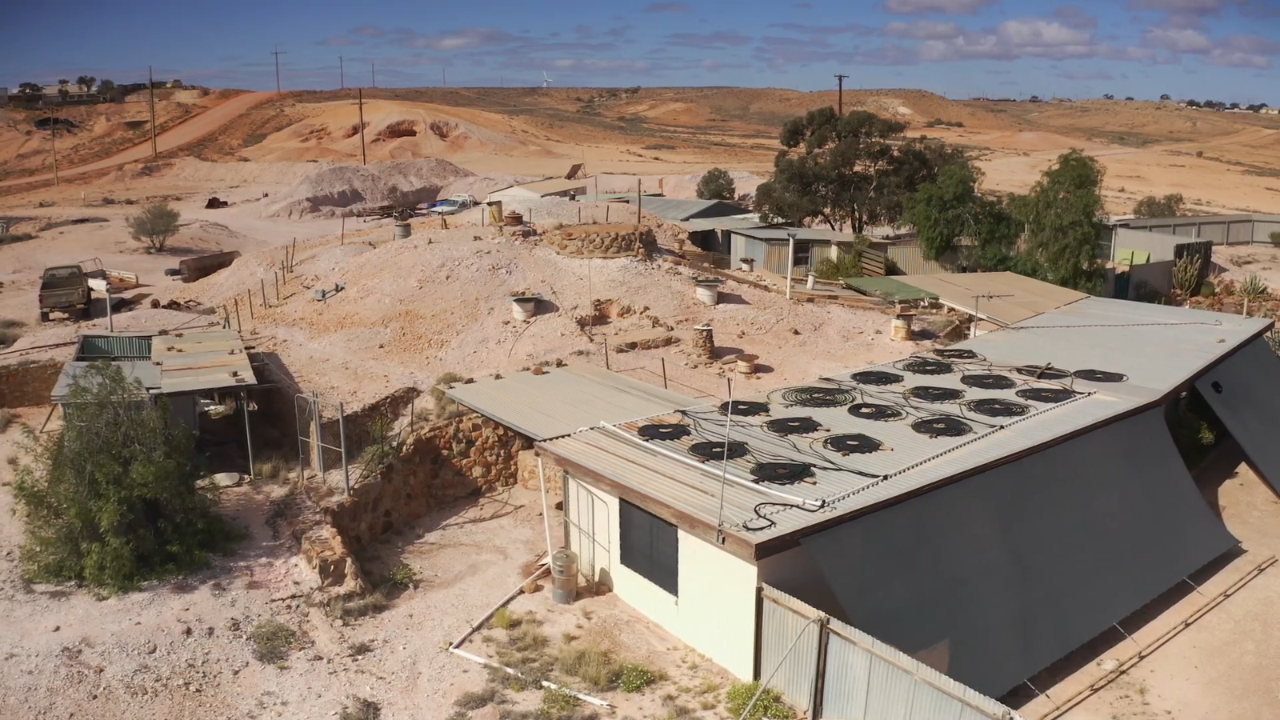
Traditional dugout residence
Faye’s Underground Home provides a different perspective on underground living.
The residence was excavated largely by hand by three women, using picks and shovels rather than the heavy machinery associated with modern construction.
Inside, you’ll find recognizable domestic spaces surrounded by exposed rock.
That’s what makes these houses so fascinating. They’re not primitive shelters or emergency bunkers, but ordinary homes arranged inside an extraordinary building material.
I suspect the novelty of having rock walls would disappear fairly quickly if you lived here. The benefits of escaping the desert heat probably wouldn’t.
Step Inside the Underground Churches
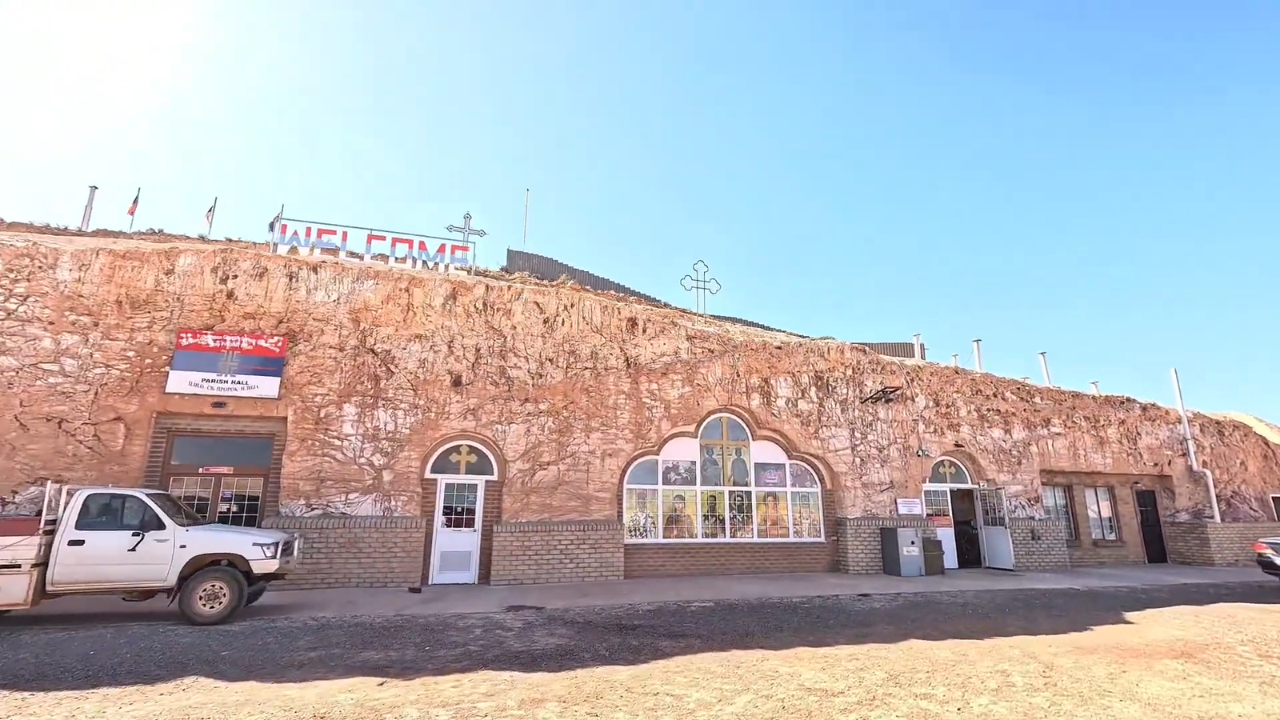
Religious architecture beneath the desert
One of Coober Pedy’s most remarkable buildings is the Serbian Orthodox Church of Saint Elijah, constructed in 1993.
Its interior includes religious artwork, carved stonework, and an underground worship space that feels dramatically different from a conventional church.
The town also has St Peter and Paul Catholic Church and the Catacomb Church, both underground.
These buildings deserve more attention than they usually receive. They demonstrate that underground construction here extends beyond practical housing.
Residents have adapted community life, religious traditions, and public architecture to the same unusual environment.
Check visiting arrangements before arriving, and remember that these are places of worship rather than theatrical tourist sets.
Discover the Umoona Opal Mine and Museum
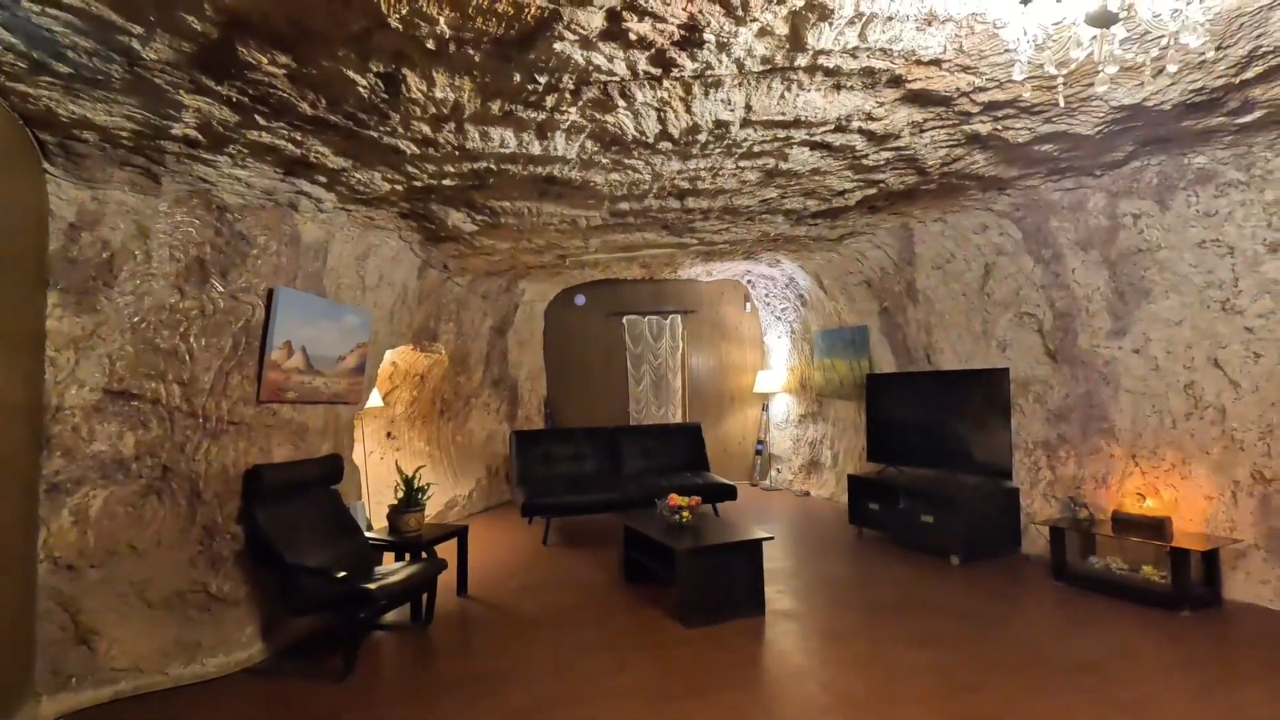
Opal history, fossils, and Indigenous heritage
The Umoona Opal Mine and Museum is another worthwhile stop, particularly if you’re interested in geology.
Its underground exhibitions explore opal formation, the region’s ancient geological history, and the development of mining around Coober Pedy.
The museum also introduces visitors to local Aboriginal heritage.
That’s an important part of the area’s story. The land was significant to Indigenous communities long before European prospectors arrived, and its history shouldn’t begin and end with the discovery of valuable gemstones.
Don’t Leave Without Seeing the Breakaways
Spectacular desert landscapes north of town
Approximately 25 kilometers north of Coober Pedy, the Kanku-Breakaways Conservation Park contains some of the most striking desert scenery in South Australia.
View this post on Instagram
Erosion has shaped the landscape into colorful hills, flat-topped formations, and broad expanses of exposed earth.
The colors are particularly impressive in the softer light of late afternoon.
The park is Aboriginal-owned and jointly managed, with important cultural and spiritual connections to its Traditional Owners.
A vehicle entry permit is required. The South Australian parks service provides information about permits, access, and temporary closures.
I wouldn’t consider a Coober Pedy visit complete without seeing this landscape.
The underground homes are fascinating, but the desert surrounding them explains why they were necessary in the first place.
Where to Stay: Book an Underground Room
The most distinctive overnight experience in town
Coober Pedy has conventional accommodation, but unless underground rooms are unavailable or genuinely outside your budget, I would avoid staying above ground.
Traveling all this way to experience an underground town and then sleeping in an ordinary motel seems like a spectacular missed opportunity.
Several properties offer dugout-style accommodation:
- Desert Cave Hotel: Offers both underground and aboveground rooms, so specify which you want when booking.
- The Lookout Cave Underground Motel: Rooms excavated into sandstone, with underground apartments available.
- The Underground Motel: A smaller property offering underground accommodation.
Expect rock walls, relatively stable temperatures, and rooms that can become extremely dark once the lights are switched off.
For me, sleeping underground would be the defining experience of visiting Coober Pedy, not simply another accommodation choice.
Japan offers another unusual place to spend the night. Nishiyama Onsen Keiunkan has welcomed guests to its remote mountain hot springs since 705 AD.
Copy text
Getting to Coober Pedy
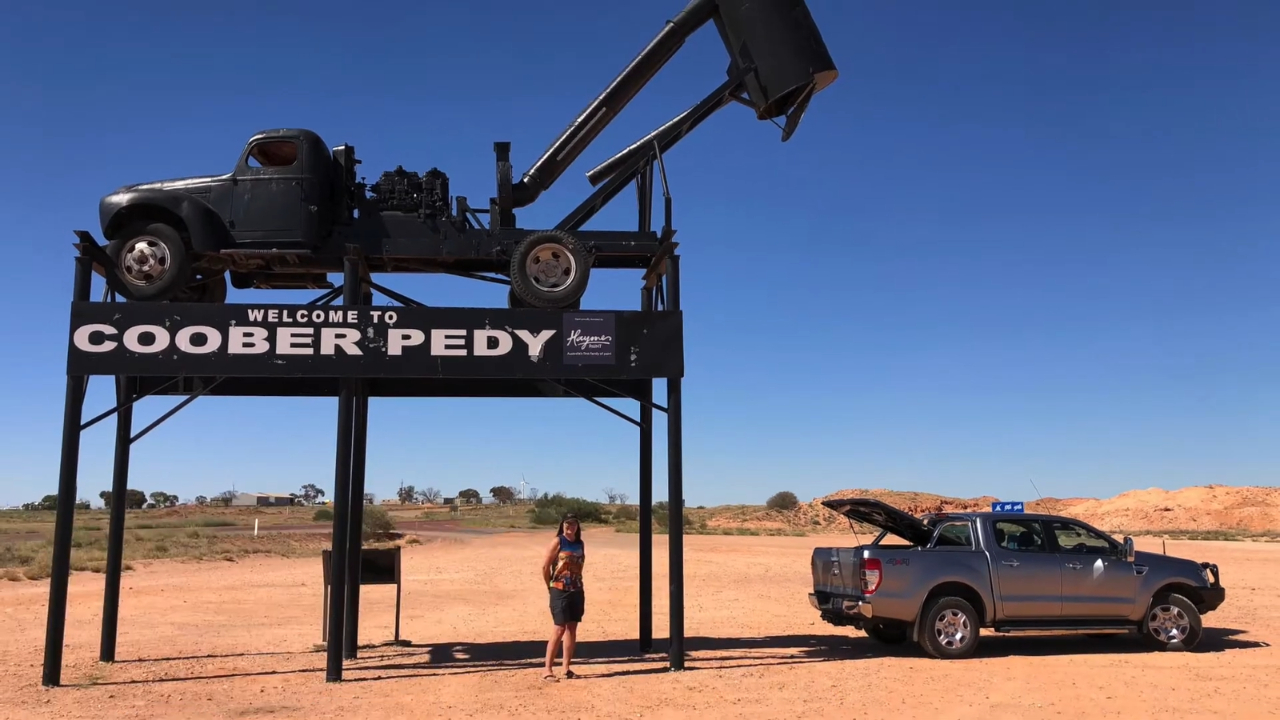
Coober Pedy sits along the Stuart Highway in the South Australian outback.
According to the District Council of Coober Pedy, the town is approximately:
- 840 kilometers from Adelaide: Allow roughly 8–10 hours of driving.
- 680 kilometers from Alice Springs: Allow roughly 6–8 hours.
The Stuart Highway is sealed, so you don’t need a four-wheel-drive vehicle simply to reach town. Some surrounding attractions, however, involve unsealed roads.
Long-distance coach services are another option, although having your own vehicle makes exploring much easier.
I’ve written before about Whittier, Alaska’s unusual road access, where getting into town involves passing through a tunnel shared with trains. Coober Pedy presents almost the opposite situation: the main highway is straightforward, but the sheer distances and desert conditions demand preparation.
Carry sufficient drinking water, check fuel availability, and don’t assume mobile reception will work everywhere outside town.
Most importantly, never wander around mining areas without knowing where you’re going. Abandoned shafts can be deep, poorly marked, and extremely dangerous.
When Is the Best Time to Visit?
I’d choose April through October, when conditions are generally more comfortable for exploring the desert.
Spring and autumn offer a particularly appealing balance of warmer days and manageable temperatures.
Winter nights can become surprisingly cold, so pack layers even though you’re visiting a place famous for its heat. December through February is another matter.
Summer temperatures can exceed 40°C, and prolonged outdoor activities become unpleasant or dangerous.
There is no prize for visiting Coober Pedy during the hottest week of the year. You’re traveling to appreciate the town’s ingenious response to extreme conditions, not to prove you can tolerate them.
Is Coober Pedy Actually Worth Visiting?
@greatbigstory Welcome to Coober Pedy, the small desert town in Australia where the entire population lives in underground homes. 🇦🇺 #fyp #cooberpedy #australia #australiantiktok #traveltiktok #greatbigstory ♬ original sound – Great Big Story
Absolutely, but I wouldn’t recommend it to someone expecting a polished resort destination.
Coober Pedy is isolated, dusty, and unapologetically shaped by mining. Some parts look neglected. The scenery immediately around town can seem bleak, and there aren’t endless restaurants or entertainment options.
Those aren’t necessarily shortcomings. What bothers me about some travel destinations is how thoroughly they’ve been packaged for visitors. Everything becomes decorative, convenient, and increasingly interchangeable.
Coober Pedy has resisted that transformation, partly because its location makes pretending to be something else rather pointless.
It’s a working outback town where people have developed an unconventional but remarkably sensible way to live.
Spend a couple of nights underground, tour a mine, walk through a subterranean church, and visit the Breakaways.
You’ll discover a place that offers something far more memorable than another pretty streetscape.
Coober Pedy isn’t remarkable because people live in holes in the ground. It’s remarkable because, in one of Australia’s harshest environments, building down instead of up turned out to be the smarter choice.