
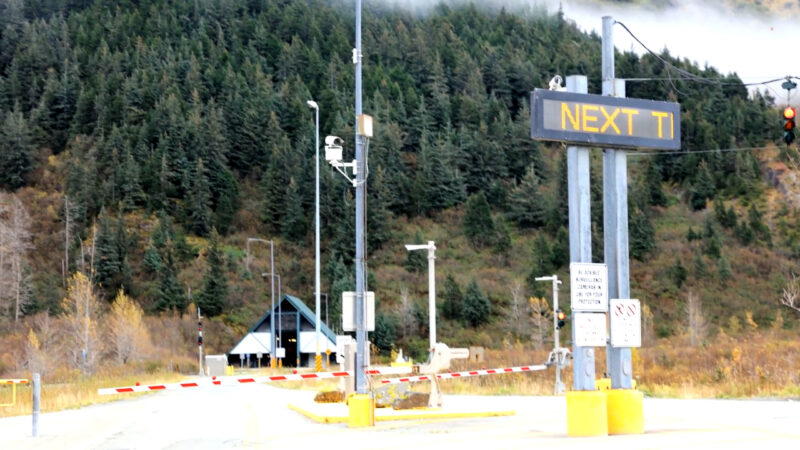
There aren’t many places in the United States where you have to wait for a traffic light before driving through an entire mountain. Whittier, Alaska, is one of them.
When Caroline and I visited Whittier, we knew about its unusual tunnel. We’d read that cars and trains shared the same passage, but I hadn’t really appreciated what that meant until we were sitting in a line of vehicles, waiting for permission to enter.
The road simply ended at a mountain. Ahead of us was a tunnel entrance, a traffic signal, and railway tracks disappearing into the darkness.
The remarkable thing is that this isn’t some abandoned military passage occasionally opened for tourists. It’s the only road connecting Whittier to the rest of Alaska’s highway system, and residents depend on it for everyday travel.
The Anton Anderson Memorial Tunnel stretches approximately 2.5 miles (4 kilometers) through Maynard Mountain. It has one lane, railway tracks running along the roadway, and a schedule that determines who gets to use it.
You don’t just drive into Whittier whenever you feel like it.
A Tunnel Where Cars and Trains Take Turns
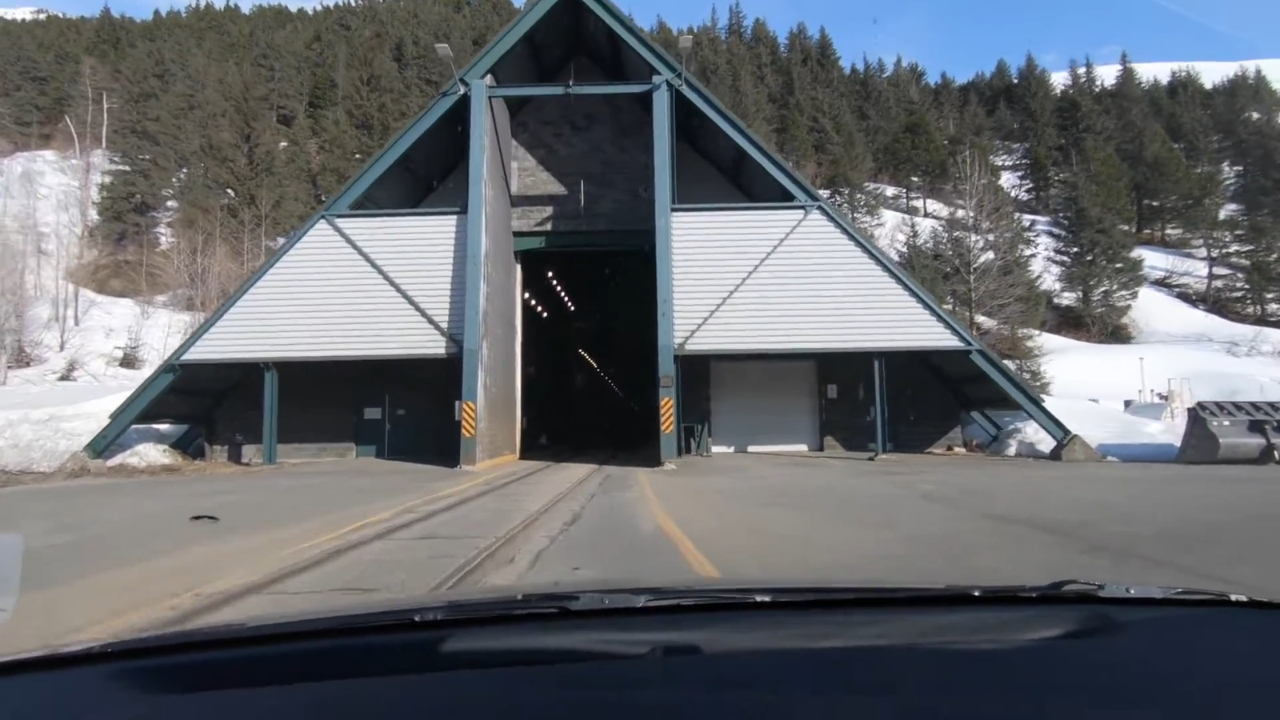
The first thing to understand is that cars and trains never use the tunnel simultaneously.
Instead, traffic moves through in carefully controlled intervals. Vehicles traveling toward Whittier get their turn, vehicles leaving town get theirs, and trains are accommodated separately.
According to the Alaska Department of Transportation, computerized safety systems prevent trains and highway vehicles from entering together. Railway switches, traffic signals, cameras, and other monitoring equipment help control the process.
The arrangement sounds complicated, but from a driver’s perspective, it’s straightforward. You wait until the signal allows your group through, follow the vehicle ahead, and maintain the posted speed.
What makes the experience unusual is the road surface itself. The railway tracks run directly through the driving lane. You’re essentially driving along a railway corridor that’s been adapted to accommodate cars.
Caroline was particularly interested in that detail. Once we entered, we could see the rails stretching ahead beneath the tunnel lights. I concentrated on keeping the car properly positioned.
The tunnel takes approximately six minutes to cross at its posted 25 mph speed limit. It’s not an especially difficult drive, although the enclosed space feels longer than you’d expect.
I’ve written about Norway’s remarkable Atlantic Road, where bridges curve over the sea in ways that seem almost impossible. Whittier’s tunnel offers a different experience. There’s nothing particularly dramatic about its appearance.
It’s the knowledge of where you’re driving that makes it memorable.
The Tunnel Was Originally Built for World War II
Whittier’s unusual transportation system makes more sense when you understand why the town exists.
During World War II, the United States military needed a protected supply port in Alaska. Whittier offered deep water, access to Prince William Sound, and mountains that helped shield the location from view.
On the opposite side of the country, World War II also left its mark on the Graveyard of the Atlantic. German U-boats attacked merchant vessels near Cape Hatteras, a coast already notorious for shipwrecks, and sent several ships to the ocean floor.
There was one substantial problem: getting supplies from the port to Alaska’s existing railway network.
In 1941, the U.S. Army began constructing a rail connection between Whittier and Portage. The project included two tunnels, one roughly a mile long and the other approximately 2.5 miles long.
Workers completed the railway connection on April 23, 1943.
The longer tunnel was eventually named after Anton Anderson, the engineer who supervised the project.
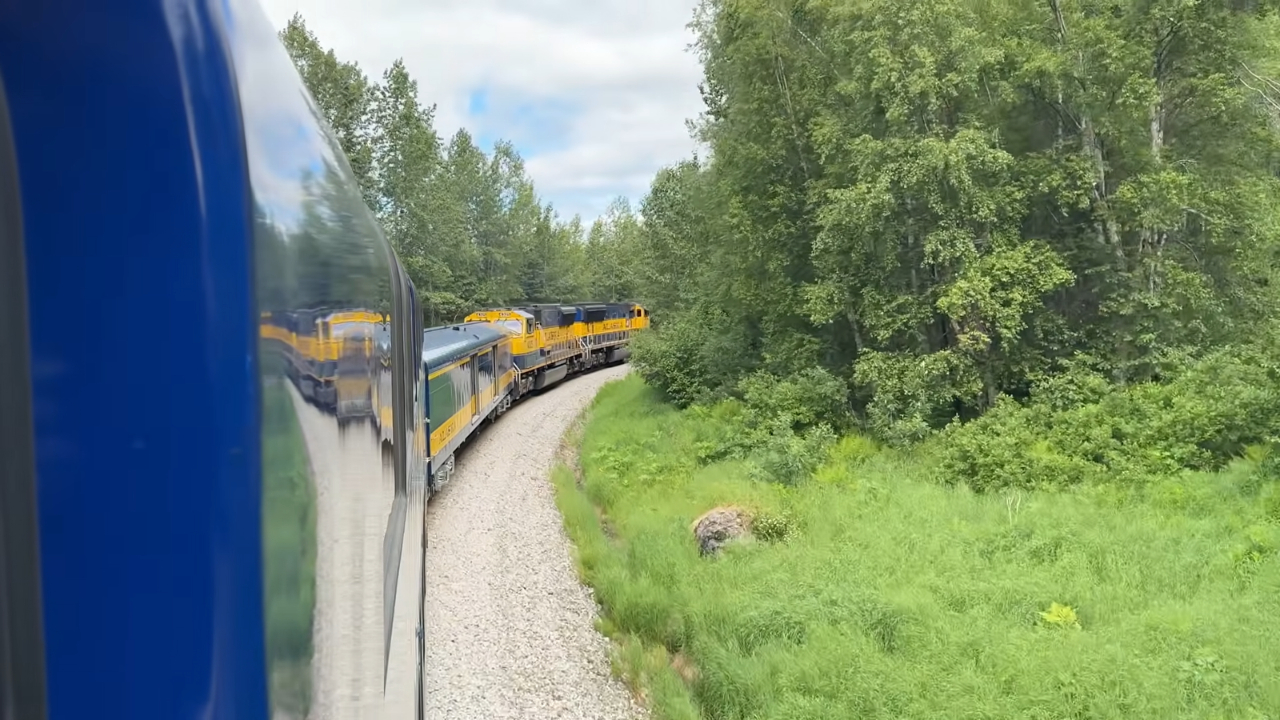
For decades, it served trains rather than ordinary highway traffic. Drivers who wanted to reach Whittier could have their vehicles transported through the mountain on railroad flatcars.
As visitor numbers increased, that arrangement became increasingly inconvenient.
Rather than excavate an entirely new highway tunnel, engineers modified the existing railway passage to accommodate automobiles.
The combined road-and-rail tunnel opened to regular vehicle traffic in 2000, giving Whittier its first direct highway connection.
I find that history considerably more interesting than the tunnel’s novelty. What began as a military supply route eventually became an essential piece of civilian infrastructure.
What’s Waiting on the Other Side?
Emerging from the tunnel was probably my favorite part of the drive. After several minutes surrounded by rock and artificial lighting, we suddenly had mountains, water, and a small harbor community in front of us.
Whittier sits at the western edge of Prince William Sound, surrounded by steep mountains that rise almost directly from the coastline.
The town is much smaller than its importance as a port might suggest.
Only a few hundred people live here year-round, and most residents occupy the same 14-story residential building: Begich Towers.
View this post on Instagram
Originally constructed for military housing, the building contains private residences and several everyday services.
That has earned Whittier a reputation as the town where almost everyone lives under one roof.
Australia has an equally unusual approach to residential life. In Coober Pedy, an underground town in South Australia, many residents live in homes carved into sandstone to escape the extreme desert heat.
Caroline and I found ourselves talking about what living there would actually involve. On one hand, having neighbors and services concentrated in a single building seems practical during an Alaskan winter.
On the other, I kept thinking about the tunnel. Imagine needing something from another town and knowing that your departure depends on a scheduled opening through a mountain.
Whittier reminded me, in a rather different way, of Monowi, Nebraska, and its single resident. Both places challenge our assumptions about what a functioning American town should look like.
But Whittier isn’t simply a curiosity. Its waterfront remains active with fishing boats, ferries, cruise ships, and smaller vessels taking travelers into Prince William Sound.
The surrounding area also offers glacier cruises, kayaking, and hiking opportunities, including the Portage Pass Trail.
It’s a genuinely worthwhile destination, not just a tunnel with a town attached.
The Schedule Is Something Visitors Should Take Seriously
Here’s where I’d offer one piece of practical advice: check the tunnel timetable before leaving Anchorage.
During the summer operating season, May 1 through September 30, regular vehicle departures toward Whittier generally occur on the half-hour, while departures toward Portage occur on the hour.
The winter schedule differs, and operating hours are shorter.
There can also be additional delays when trains need the tunnel.
The state’s official tunnel schedule recommends arriving at the staging area at least ten minutes before your scheduled opening.
Missing your departure can mean waiting another half hour. Missing the final opening of the evening can mean staying in Whittier overnight.
There’s also a toll. The published passenger vehicle rate is $13 for a round trip, collected when entering from the Portage side.
For a short visit, these details matter.
Caroline and I were conscious of the return schedule while exploring the waterfront. It’s an unusual feeling, knowing that leaving town isn’t entirely a decision you can make spontaneously.
I’d recommend allowing several hours in Whittier, particularly if you intend to take a boat excursion or hike.
Trying to squeeze everything between closely spaced tunnel openings rather defeats the purpose of visiting somewhere like this.
Whittier Is Worth More Than a Drive Through the Mountain
@chelsea.shafer through the tunnel is my favorite part ☕️ #whittieralaska #alaska #alaskatok #whittier #alaskalife ♬ original sound – shell sea
It’s tempting to treat the tunnel as the main attraction, especially when it’s frequently described as North America’s longest combined vehicle-and-railroad tunnel.
But I wouldn’t recommend driving all the way there simply to emerge, take a photograph, and immediately head back.
Walk around the harbor. Look at the mountains surrounding Passage Canal. If time and weather permit, consider a glacier cruise into Prince William Sound.
The Alaska tourism website provides a useful overview of the outdoor activities available around Whittier.
More importantly, take a moment to consider what the tunnel means to the people living there.
Tourists might experience it once or twice. Residents use it to reach medical appointments, visit family, transport supplies, and conduct ordinary business. For them, the tunnel’s schedule is part of daily life.
When Caroline and I drove back through the mountain, the experience felt different from our arrival. We’d seen the community that depended on this peculiar transportation arrangement, and the engineering suddenly seemed less like a novelty.
Whittier is often presented as an odd little town hidden behind a mountain. I think that description sells it short.
It’s a working Alaskan port whose geography demanded an unconventional solution. For more than eight decades, that solution has involved sending people and goods through the same narrow passage beneath Maynard Mountain.
The railway came first. The cars followed. And somehow, with a little patience and a carefully managed timetable, the arrangement continues to work.
Not every memorable road trip needs a spectacular highway. Sometimes the most interesting road is one you have to wait your turn to enter.
Japan has its own remote mountain destination worth the journey. Nishiyama Onsen Keiunkan, the world’s oldest hotel, sits deep in a valley of the Southern Japanese Alps.
Copy text