
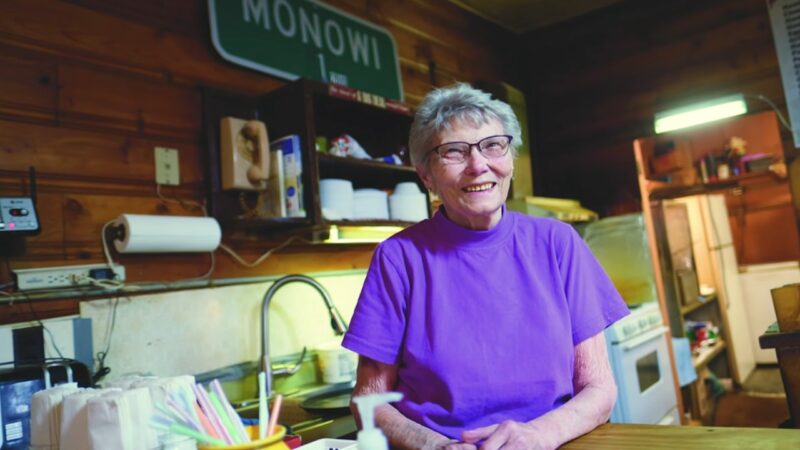
Monowi, Nebraska, has a mayor, a town clerk, a treasurer, a librarian, and a tavern owner. They’re all the same person.
Her name is Elsie Eiler, and at 92 years old, she’s the only resident of this tiny incorporated village in northern Nebraska. She serves hamburgers and drinks at the Monowi Tavern, looks after a library containing thousands of books, and handles the municipal paperwork required to keep her town functioning.
Monowi sits along Nebraska Highway 12 in Boyd County, not far from the South Dakota border. The population sign reads one, although the tavern can be surprisingly busy with farmers, ranchers, travelers, and people from neighboring communities.
It’s an extraordinary arrangement, though I think the population figure sometimes distracts from the more interesting story. Monowi was once a functioning railroad community with shops, a school, a church, and families who expected to spend their lives there.
Over the decades, nearly everyone left. Elsie stayed. And rather than allowing the last remaining pieces of Monowi to disappear, she has spent more than twenty years keeping them going.
Monowi Was Once a Busy Railroad Town
View this post on Instagram
Monowi’s story began in 1902, when the Fremont, Elkhorn and Missouri Valley Railroad expanded through this part of Nebraska. The railway brought opportunities for farmers, ranchers, merchants, and families who needed a place to trade goods and access services.
The settlement grew around the tracks. It eventually had a general store, hotel, bank, post office, school, church, and even a doctor and pharmacist.
According to The Crofton Journal’s 2025 history, Monowi reached a population of 123 in 1930. For a small agricultural community, that was enough to support a surprisingly varied collection of businesses and institutions.
How a Town Gradually Disappeared
Monowi’s decline followed a pattern seen throughout the American Great Plains.
Agriculture became increasingly mechanized, reducing the number of workers needed on farms. Cars and improved highways made it easier for rural families to shop and access services in larger communities. Young people left for education, employment, and opportunities that smaller towns struggled to provide.
When the railroad stopped serving Monowi, another reason for the town’s existence disappeared.
Towns along Route 66 faced a similar economic threat when interstate highways diverted traffic away from their local businesses.
A similar economic decline hit Leavenworth, Washington. Its residents responded with a Bavarian-style makeover that helped revive the town.
| Year | Population |
| 1930 | 123 |
| 1950s | 99 |
| 1980 | 18 |
| 2000 | 2 |
| 2010 | 1 |
| 2020 | 1 actual resident (2 in published census data) |
By 1980, only 18 people remained. The school and post office had closed, businesses had disappeared, and once-busy buildings were deteriorating.
I find the gradual nature of Monowi’s decline more revealing than its final population. A town doesn’t usually disappear because everyone suddenly decides to leave. It loses a school, then a business, then a family. Each departure makes it a little harder for the next person to justify staying.
Eventually, the community reaches a point where there are no longer enough people to sustain the institutions that once held it together.
By the 2000 census, Monowi had just two residents: Elsie and her husband, Rudy Eiler. When Rudy died in 2004, Elsie became the town’s sole inhabitant.
The Monowi Tavern Is Still the Center of Community Life
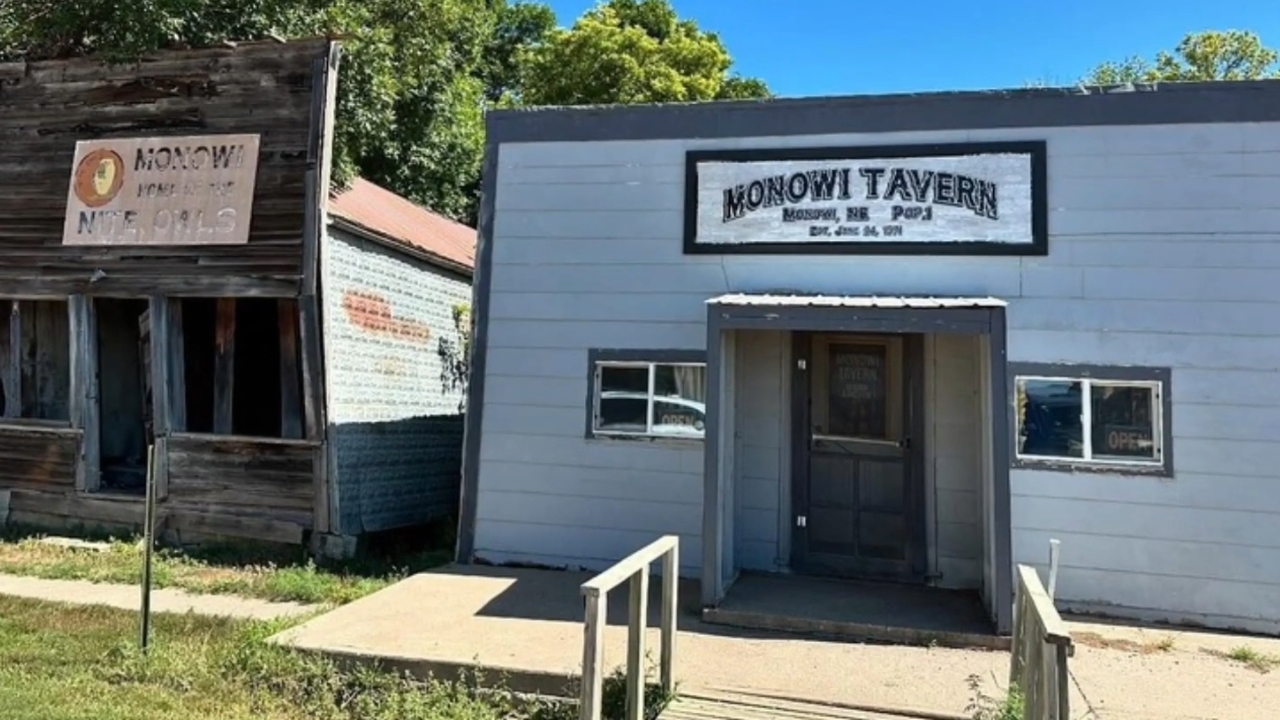
Elsie and Rudy took over the Monowi Tavern in 1971. More than half a century later, the little bar and grill remains the town’s only operating business.
It serves the sort of straightforward food you’d expect from a traditional rural Nebraska tavern. Burgers, fries, coffee, and cold drinks are more important here than elaborate menus or changing culinary fashions.
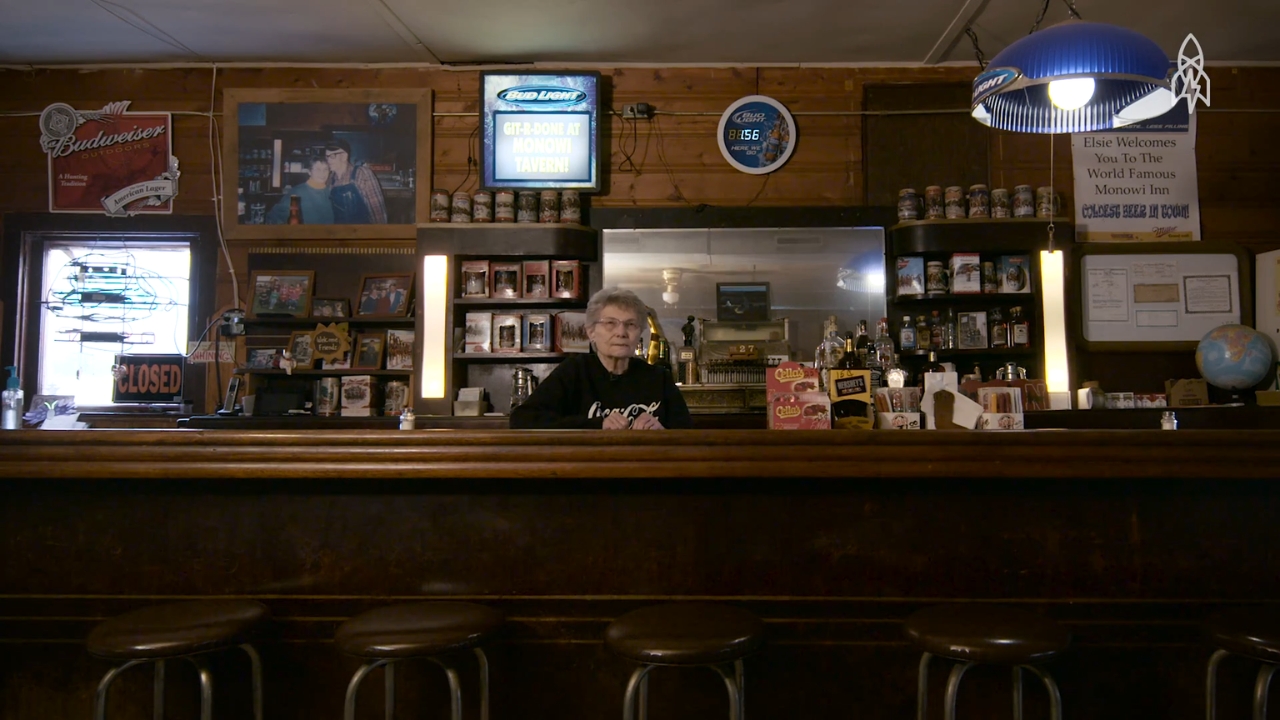
The building itself is modest, with wooden walls, a bar, a handful of tables, and photographs and memorabilia collected over the years. What makes the tavern remarkable is its clientele.
Although Monowi officially has one resident, its regular customers come from farms, ranches, and neighboring towns. Some drive considerable distances to have lunch, meet friends, or catch up on local news.
Nebraska Public Media reported in 2021 that Elsie estimated roughly 50 visitors a day. The tavern’s 50th-anniversary celebration drew farmers, law enforcement officers, relatives, and longtime customers.
That tells us something important about how rural communities function.
A town’s population isn’t necessarily the same as the number of people who depend on it.
Monowi’s residents have almost entirely disappeared, yet its tavern continues to serve a much larger social community.
Why the Tavern Matters Beyond Its Food
In a densely populated city, people have countless places to meet. Cafés, restaurants, parks, libraries, and community centers all provide opportunities for social interaction.
In sparsely populated rural areas, those opportunities are spread across greater distances.
A tavern like Elsie’s can become the place where farmers compare notes, friends maintain relationships, and several generations of families continue traditions.
According to Eater’s detailed profile of Elsie, locals have gathered for wintertime card games, and some regulars have been visiting the establishment for decades.
I’m generally skeptical when travel stories romanticize tiny communities as places where everyone knows everyone. Familiarity doesn’t automatically make life easier, and rural isolation brings genuine inconveniences.
Still, Monowi illustrates something that larger towns occasionally forget. A business can be socially valuable even when its economic importance appears small.
Take away the Monowi Tavern, and neighboring residents would lose more than somewhere to buy a hamburger.
They would lose a meeting place with decades of shared history.
Elsie Is Also the Mayor, Clerk and Treasurer
Running a tavern six days a week would already be a substantial workload for someone in her nineties. Elsie also manages Monowi’s local government.
Because the village remains incorporated, certain administrative responsibilities still exist regardless of its population. Elsie serves as mayor, clerk, secretary, and treasurer, handling the responsibilities that would ordinarily be divided among several officials.
Her duties have included preparing municipal budgets, arranging taxes, maintaining paperwork for road funding, and renewing licenses.
She has even been responsible for issuing the liquor license for her own tavern.
The arrangement sounds like something invented for a comedy, but it reflects the practical requirements of keeping a legally recognized municipality functioning.
Does Monowi Really Have a Government With One Person?
Yes. Monowi is an incorporated village, rather than simply an abandoned settlement or a collection of buildings with a geographical name.
Its municipal government has effectively been reduced to one person.
Elsie handles the administrative work necessary to maintain the village’s official status and arrange basic municipal services.
The Guinness World Records profile published in May 2025 recognizes Monowi for its exceptionally small population and describes the many municipal responsibilities Elsie performs.
Stopped in to the Monowi Tavern in Monowi, Nebraska and met the legendary Elsie Eiler.
Monowi holds a Guinness World Record for the smallest town in America, with one sole resident…Elsie Eiler. She’s also the owner, bartender and cook of the tavern, as well as the town librarian, tax collector and mayor.
Elsie is 92 and has owned this bar for 55 years, since she and her late husband Rudy opened it back in 1971.
— Dan Osborn (@osbornforne) July 12, 2026
Another unusual Guinness World Record belongs to Nishiyama Onsen Keiunkan in Japan, officially recognized as the world’s oldest hotel.
There’s a distinction here that I think deserves more attention.
Monowi’s government might be unusually small, but the obligations behind it aren’t imaginary. Roads still require maintenance, streetlights need electricity, and official paperwork still has deadlines.
Having one resident doesn’t magically eliminate the practical problems of running a town. It just leaves fewer people to deal with them.
Rudy’s Library Keeps Another Part of Monowi Alive
A short distance from the tavern stands another important part of Monowi: Rudy’s Library.
Elsie’s late husband was an enthusiastic reader who accumulated approximately 5,000 books over his lifetime.
Rudy had wanted to establish a public library, but he died before the project could be completed.
After his death in 2004, Elsie, with help from family and friends, fulfilled his wish by establishing a small library to house the collection.
The library opened in 2005 and contains a mixture of books, magazines, and other reading materials.
The Library of Congress documented Rudy’s Library in its photographic collection, describing its thousands of volumes and an informal borrowing system that allowed visitors to check out books themselves.
A Library for a Town of One
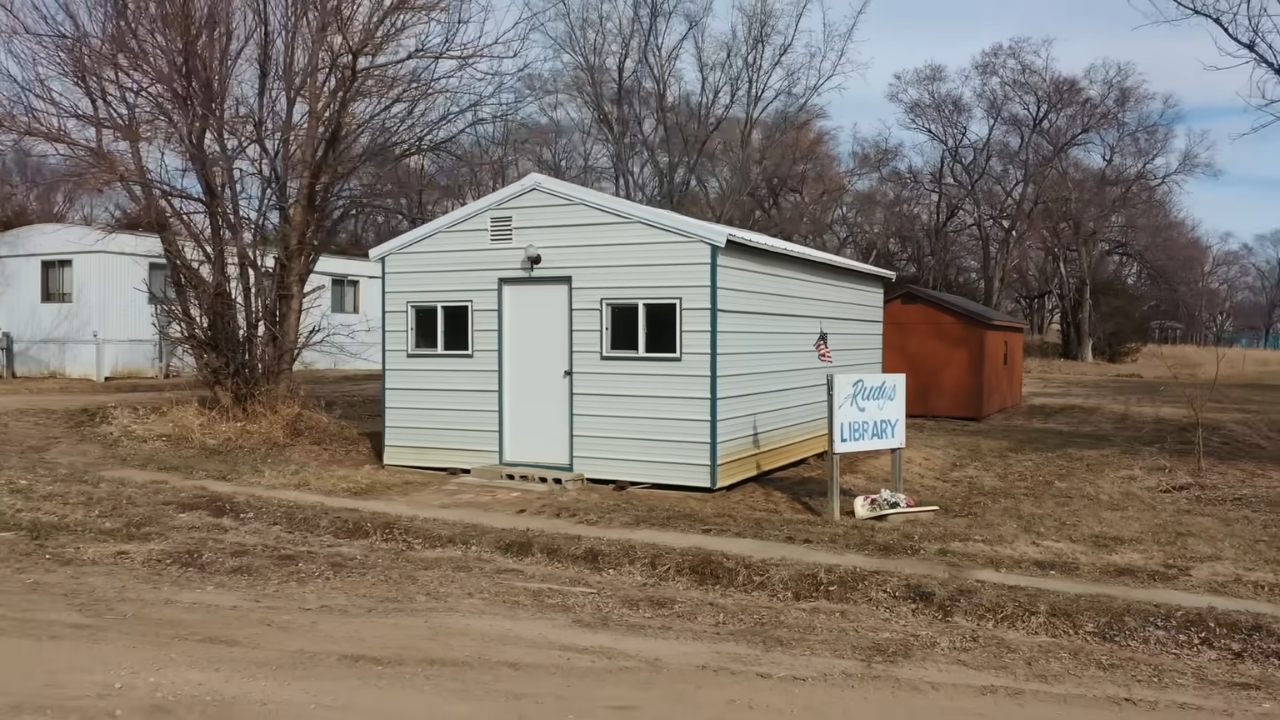
From a strictly practical perspective, maintaining a library in a village with one resident seems difficult to justify. But that would be a fairly narrow way to judge its value.
Rudy’s Library preserves a personal collection, provides visitors and surrounding communities access to books, and keeps something of Rudy’s personality present in the place where he spent much of his life.
I particularly like this part of Monowi’s story because it complicates the usual narrative of a disappearing town.
The population fell to one, yet the remaining resident helped create a public institution rather than simply watching the last ones close.
There is also something rather fitting about a town with almost nobody left having thousands of books containing stories about other people and places.
More importantly, the library has a purpose that can’t be reduced to visitor numbers.
It’s a memorial to a man, a marriage, and a shared life in a community that has almost vanished.
Is Monowi Really a Town of One? The Census Says Otherwise
There’s an interesting complication in Monowi’s population figures.
The 2010 United States Census recorded one resident, confirming its status as the country’s smallest incorporated community. However, the published 2020 Census recorded two people. That didn’t mean somebody had quietly moved in with Elsie.
The discrepancy is attributed to the Census Bureau’s statistical privacy protections, which can introduce small changes into published population figures to prevent individual residents from being identified.
The Census Bureau’s official Monowi population profile still displays two residents for 2020. Meanwhile, the National Conference of State Legislatures explains how differential privacy can alter published population totals for small geographic areas.
Elsie remains the only person actually living in Monowi.
It’s an unusual statistical problem. With millions of people living in most American states, a tiny adjustment to published census data can go unnoticed.
In Monowi, adding one imaginary resident effectively doubles the population.
I can’t think of many better examples of how a perfectly reasonable national data-protection policy can produce an odd result at the local level.
Living Alone Doesn’t Mean Elsie Is Lonely
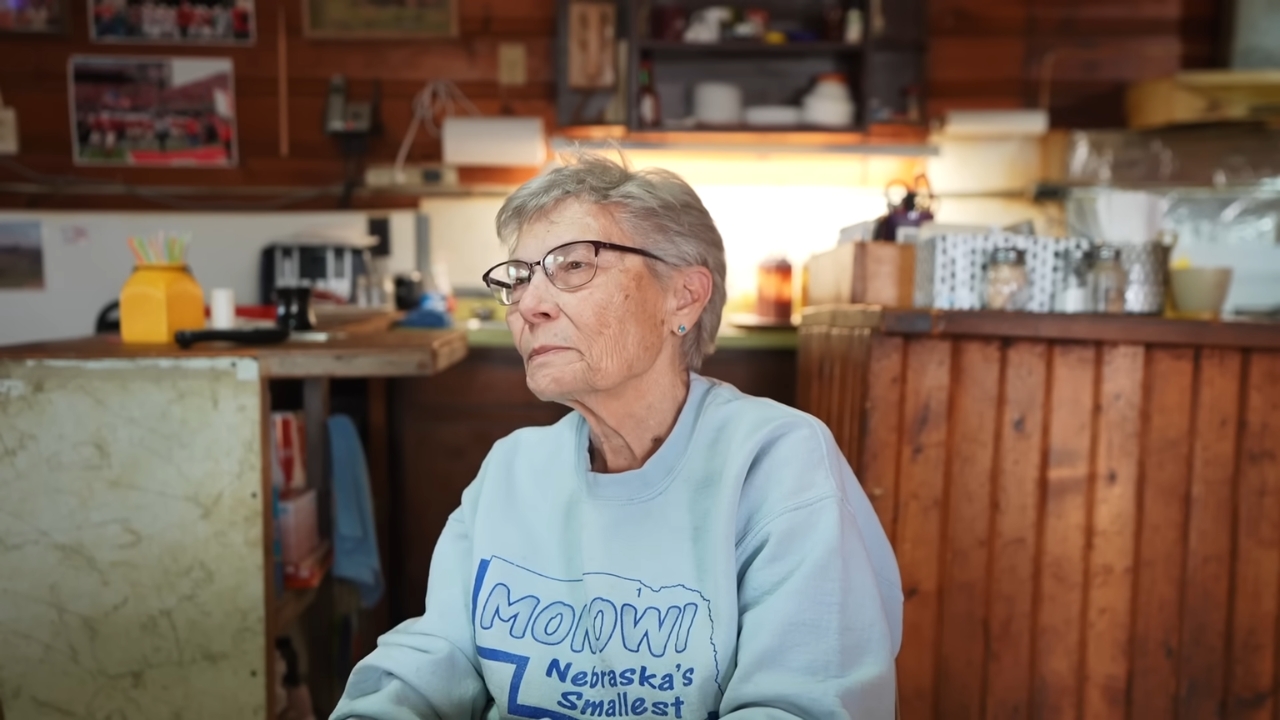
It’s tempting to imagine life in Monowi as a lonely existence surrounded by abandoned buildings.
That assumption doesn’t match what Elsie has repeatedly explained in interviews.
She has family, friends, regular customers, and visitors who come from well beyond Nebraska. The tavern keeps her in contact with people almost every working day.
In a 2025 interview referenced by Guinness World Records, Elsie explained her attachment to Monowi:
“This is my home. All my friends are around. Why would I want to leave?”
Her response gets to the heart of why she remains.
Elsie doesn’t define her community exclusively by the municipal boundaries of Monowi. Many of the people who matter in her life live elsewhere, but they’re still part of the social world surrounding the tavern.
In fact, visitors have reportedly come from all 50 states and more than 60 countries.
The Difference Between Population and Community
There’s a broader point worth making here.
Small-town decline is frequently discussed through population charts, falling property values, and disappearing businesses. Those measurements matter, particularly when we’re trying to understand economic change.
They don’t capture every aspect of community life. Elsie’s relationships extend beyond Monowi’s official boundaries. The tavern continues attracting customers, and the library remains connected to her husband’s memory.
Of course, that doesn’t make the town’s decline insignificant. Losing neighbors, services, and local institutions creates real difficulties.
But I think Monowi challenges the assumption that geographical isolation always produces social isolation.
Whittier, Alaska, offers another unusual example of community life. Most residents share a single residential tower, and the town’s only road passes through a tunnel shared with trains.
The two can overlap. They aren’t the same thing.
Can You Visit Monowi, Nebraska?
@lucascruikshankI went on vacation to a town of just one person♬ original sound – LucasCruikshank
Yes. Monowi is a real place, and visitors regularly stop at the tavern. It can make an interesting detour during a road trip through northern Nebraska.
It’s important, though, to arrive with realistic expectations.
Monowi isn’t a preserved historical village with museums, guided tours, souvenir shops, and a carefully arranged visitor experience. It’s a small rural settlement with a functioning tavern, a library, some surviving buildings, and one permanent resident.
A developer in China created a replica of Austria’s Hallstatt as part of a residential complex. Monowi has a very different appeal: the real history of a town that survives with just one resident.
Where to Find Monowi
Monowi is in Boyd County along Nebraska Highway 12, approximately seven miles east of Lynch. The Nebraska Tourism Commission listing gives the Monowi Tavern’s address as 9 Broad Street, Monowi, NE 68746.
There’s no regularly scheduled public transportation to rely on for this visit, so driving is the practical option.
What to Know Before Visiting
A few practical considerations can make the experience better for everyone.
- Check before making a special trip. The tavern has traditionally operated six days a week, but opening hours and services can change. Current hours weren’t independently confirmed.
- Plan for a short visit. Monowi is better suited to a stop during a wider regional journey than a full day of sightseeing.
- Respect private property. Some of the surviving buildings are abandoned or privately owned, and Elsie’s home isn’t a tourist attraction.
- Ask about Rudy’s Library. Don’t assume it will be accessible whenever you arrive.
- Support the tavern. If it’s open, ordering food or a drink is a more meaningful way to support Monowi than simply taking a photograph of the population sign.
I would also resist treating Elsie as someone obligated to entertain every visitor who arrives.
There’s a difference between showing interest in an unusual place and expecting its sole resident to perform the story you’ve read about online.
The best approach is to behave as you would in any small local establishment. Be friendly, be considerate, and recognize that people are going about their ordinary lives.
Even if those ordinary lives happen to attract international attention.
What Happens to Monowi When Elsie Is Gone?
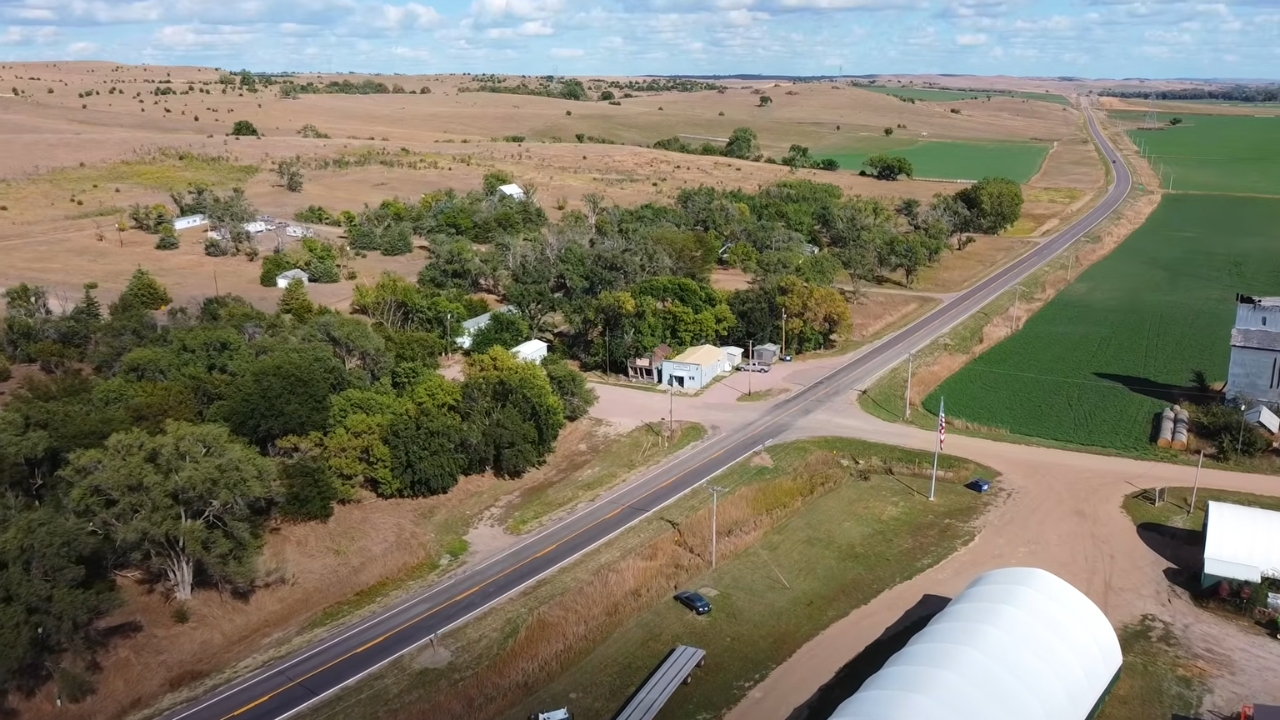
Monowi’s future is uncertain, and it’s difficult to discuss the village without acknowledging that reality.
Elsie has spent decades operating the tavern and more than twenty years managing the community on her own. At 92, she remains closely associated with practically everything that makes Monowi recognizable.
There is no confirmed long-term succession plan that guarantees the tavern, library, and municipal government will continue operating in their present form.
Elsie herself has acknowledged that she doesn’t know what the future holds for the place.
That uncertainty gives Monowi’s story a weight that its unusual population statistic doesn’t fully convey.
The village has already experienced the disappearance of its railroad, school, post office, shops, and most of its homes. Its final chapter remains unwritten.
Yet I don’t think Monowi should be remembered simply as a town that shrank until one person was left.
For more than half a century, Elsie has served meals to people passing through northern Nebraska. She helped preserve her husband’s books, maintained relationships across surrounding communities, and continued handling the decidedly unglamorous business of municipal administration.
None of that reversed the population decline. It did, however, prevent Monowi from becoming just another abandoned settlement.
The remarkable thing about Monowi isn’t that it has only one resident. It’s that, thanks to that resident, it still has a community.