
My father drove long-distance buses out of Baltimore, and he brought home printed timetables from every depot he passed. I read them at the kitchen table the way other kids read box scores, and they taught me that every town has a rhythm: who arrives, when, and why.
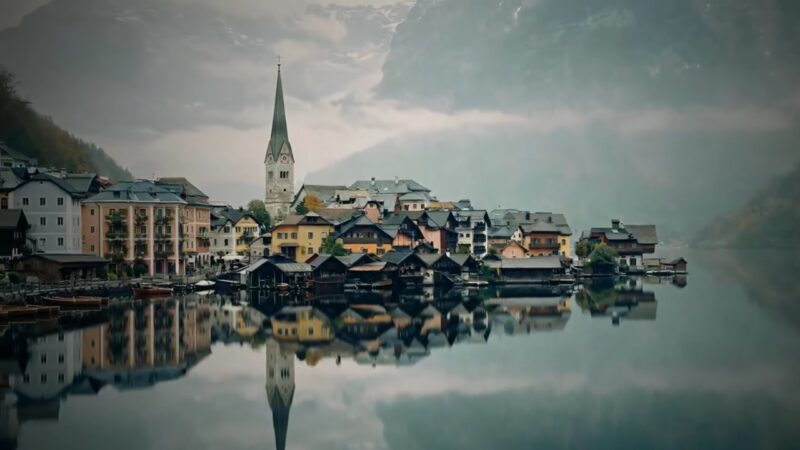
In 2011, a Chinese developer was already building a copy of the center of Hallstatt, an Austrian lake village, and most of the roughly 800 people who live there heard about it secondhand. The copy got the church spire right. It could not copy the reason the village exists.
How Hallstatt Found Out It Had a Twin
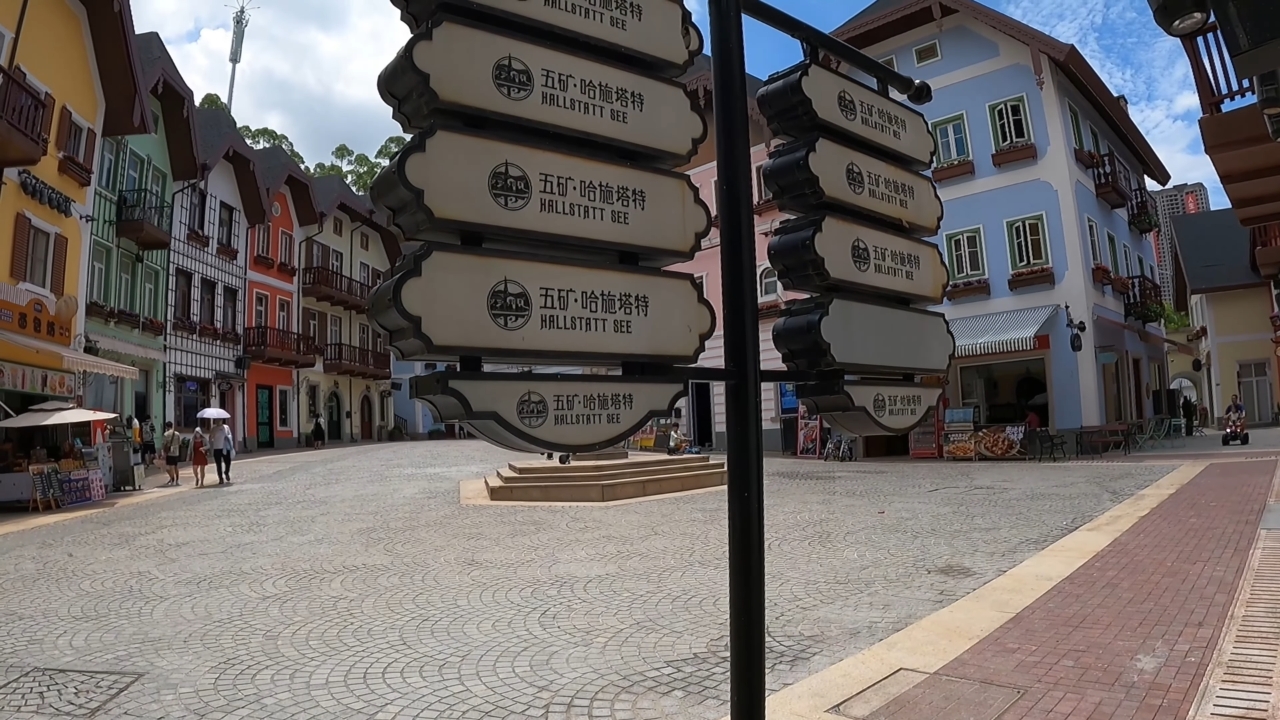
According to the developer, construction in Guangdong began in April 2011.
Hallstatt’s mayor, Alexander Scheutz, only caught wind of it in May, when the Chinese company asked an Austrian trade delegation in Hong Kong about a partnership between the two towns. Weeks later, as Der Spiegel reported in June 2011, he learned the plans were far more advanced than he had been told.
Residents heard later still. A Chinese guest at Monika Wenger’s hotel, someone involved in the project, let it slip in early June. Villagers then realized that people from the developer had been photographing and measuring the town while mixing with ordinary tourists.
A detail from the original Associated Press reporting: Wenger said the drawings she obtained showed parts of Hallstatt in mirror image, which some read as a way to sidestep copyright claims.
What the Developer Actually Built
View this post on Instagram
The copy is not a theme park. It is a high-end housing estate built by Minmetals Land, the real estate arm of the state-owned China Minmetals group, outside Huizhou in Guangdong province. The basic facts, as reported at the time:
| Item | Detail |
| Location | Boluo County, Huizhou, Guangdong, about 60 miles from Hong Kong |
| Reported cost | About $940 million |
| Opening | June 2, 2012 |
| Copied core | About 215,000 square feet, roughly 5 acres |
| Whole development | About 247 acres, with more construction planned |
| Copied features | Church tower, market square, fountain, pastel houses |
The Shanghai Daily report carried by China.org.cn noted that the houses were meant for investors. The village look covers only the core; the rest is a large residential project, and the square was already open to visitors while construction continued.
The Numbers That Keep Getting Repeated Wrong
This story has circulated on social media for over a decade, and versions drift. I checked the most common claims against the 2011 and 2012 reporting:
- “An entire village.” The developer copied the touristy center. A Minmetals representative told the AP the goal was never to reproduce every detail.
- “$7 billion.” This figure circulated on blogs in 2011. The cost reported at the opening was about $940 million.
- “100 miles from Hong Kong.” A widely syndicated wire story printed “60 kilometers (100 miles),” and both numbers can’t be right. The rail distance from Hong Kong’s West Kowloon station to Huizhou South is about 60 miles.
- “The town that inspired Frozen.” That is a rumor. Disney’s art director has said the team drew on Norway and Canada.
None of these errors change the core story. They do change how big it sounds.
How the Village Reacted, Then Changed Its Tune
The first reaction in Hallstatt was hurt more than anger. Wenger told reporters most people she spoke to objected to the approach, not the idea. She disliked knowing that a team had spent years studying the town without introducing itself.
Scheutz said he was stunned but not outraged, and he alerted UNESCO and Austrian authorities. A souvenir shop owner, Ingrid Janu, took the friendlier view that it was a compliment.
Within a year the tone had shifted. Scheutz flew to China with an Austrian delegation for the June 2012 opening and signed a cultural exchange agreement with the new Hallstatt.
Hallstatt’s tourism director, Pamela Binder, said the village had moved from insecurity to pride. Wenger, who was also there, still said the company should have asked the owners first. Both feelings, I think, were honest.
The Story the Copy Could Not Reproduce
Every place I write about has one story it should be known for. Hallstatt’s is salt. The name itself refers to a salt settlement, and people were producing salt here in the Bronze Age, more than 3,000 years ago.
The mines made the region rich until the mid-20th century, and that money built the houses everyone photographs.
Opal mining shaped another extraordinary settlement thousands of miles away. In Coober Pedy, Australia’s underground town, miners excavated homes into the same ground that provided their livelihoods.
Did you know? An Iron Age society that traded across Europe is named after this village: archaeologists call it the Hallstatt Culture. The town itself was rebuilt in late Baroque style after a fire in 1750 destroyed its timber buildings. The UNESCO World Heritage listing, inscribed in 1997, covers the whole Hallstatt-Dachstein/Salzkammergut cultural landscape.
#TravelTuesday takes us to explore Hallstatt-Dachstein, Austria! ❄️
A #WorldHeritage site since 1997, Hallstatt combines ancient salt-mining history with a beautiful alpine landscape. Snowy mountains and twinkling lights – would you visit? ✨
Learn more: https://t.co/FejCAwLdr9 https://t.co/Lf6fYvxLuK
— UNESCO (@UNESCO) December 31, 2024
A builder in Guangdong can match the paint colors. It cannot dig a salt mine into a subtropical hillside, and that is the difference I want visitors to understand before going to either.
Another remarkable example of genuine historical continuity is Nishiyama Onsen Keiunkan, a Japanese hotel established in 705 AD that still welcomes guests today.
Copy text
Why Hallstatt, of All Places
Hallstatt’s fame in Asia grew after it appeared in the 2006 South Korean drama Spring Waltz. Austrian officials said fewer than 50 Chinese tourists visited in 2005; by 2012, thousands were coming every year. For a developer selling homes to China’s new rich, it was an obvious postcard.
It also fit a pattern. Chinese developers had already built English-style Thames Town near Shanghai and a Paris-themed district with its own Eiffel Tower. Hallstatt was different because it was a living village of a few hundred people, not a capital city.
Americans did a version of this too, with consent. A Washington logging town rebuilt itself as Bavaria by choice.
The Copy Sent More People to the Original
@halfpackedhannah 🏠 Tiny but famous: Hallstatt has fewer than 800 residents, but it’s world-famous. China literally built a full-size replica of the village in Guangdong. 🧂 Salty history: It’s home to the world’s oldest salt mine (over 7,000 years old). In fact, “Hall” means salt, and the village’s entire history basically sparkled from salt trade. 🚤 Lake life: Gas-powered boats aren’t allowed on Hallstätter See, so the lake stays super calm and mirror-like. perfect for reflections of the mountains and swans that glide around. 🪦 Sweetly spooky: Because the town is so small, it ran out of cemetery space long ago. They created a “bone house” (Beinhaus), where skulls are decorated with painted flowers and names. #travelaustria #hallstatt #smalltown #CapCut ♬ Beanie – Piano Version – Penguin Piano
Wenger had predicted that people who saw the Chinese version would want the real one, and she was right. Before the pandemic, Hallstatt drew around a million visitors a year, and news reports say peak days bring up to 10,000 people to a village of roughly 700 to 800 residents.
A far smaller American village offers an interesting contrast. In Monowi, Nebraska, one resident maintains a tavern that attracts travelers to an otherwise nearly empty town.
On my hill in Lisbon, tour groups photograph my neighbor’s laundry, so I know that fatigue. In Hallstatt it boiled over:
- In May 2023, a wooden fence went up to block the most popular selfie spot. It came down after an online backlash.
- On August 27, 2023, more than 100 people blocked the north portal of the access tunnel for 15 minutes, according to Salzburg24 and the Austrian news agency APA.
- Protesters asked for a daily visitor cap and a ban on tour buses after 5 p.m. Neither had become law in the coverage I found.
Rome has adopted another approach at the Trevi Fountain. A €2 fee applies to most nonresident visitors who enter the inner area, and the famous coin donations continue to support local charities.
If You Want to Visit the Real Hallstatt
These are the boring tips, which are usually the useful ones. Last checked: October 2026.
- Tour buses need a booked slot. Since June 1, 2020, every coach must reserve entry and exit times through the town’s bus registration system, with a minimum stay of 2 hours and 20 minutes. Reported daily caps were around 50 to 54 coaches.
- Take the train and ferry. Hallstatt’s station sits across the lake, and a boat carries you to the village. You arrive the way people did before the road tunnel.
- Stay overnight if you can. In my opinion, one night beats three day trips. Most day-trippers arrive and leave within daytime bus slots, so evenings are calmer.
- Respect private signs. Many lakeside houses are homes, and drone flying is discouraged.
Can You Visit the Chinese Version?
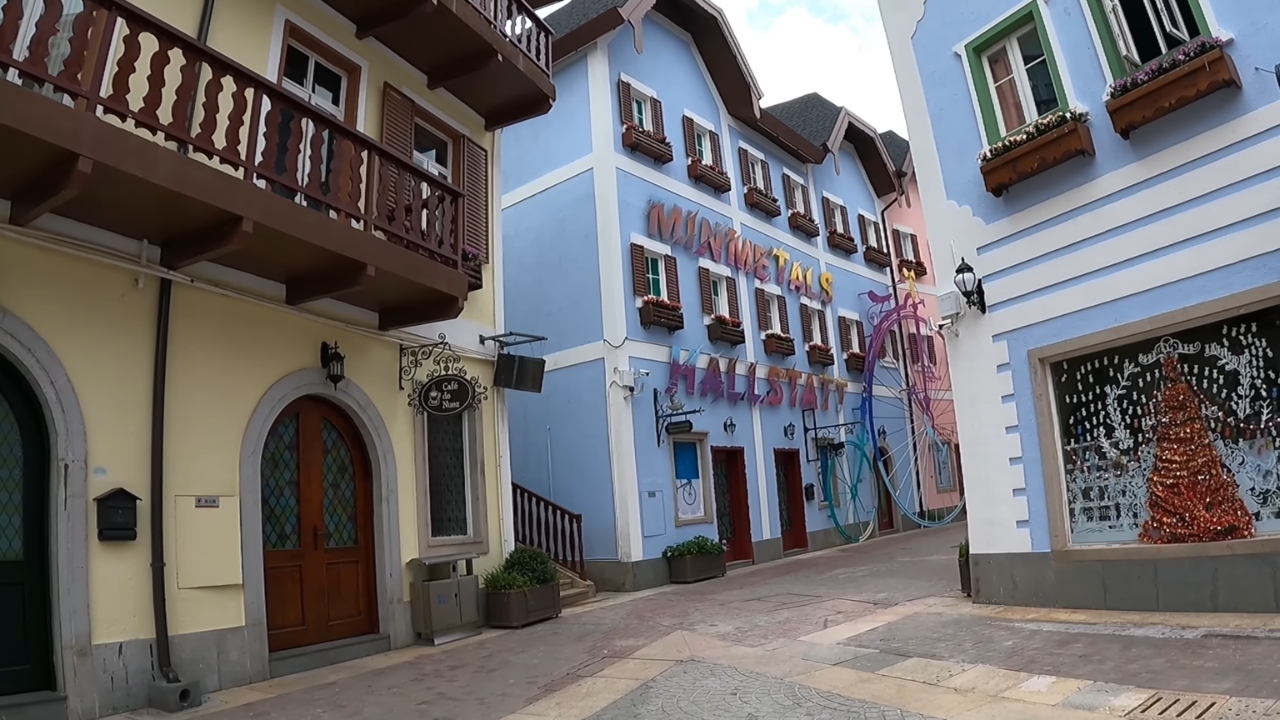
Yes, in principle, though I have not been. The estate, which the operator calls Hallstatt See, sits near Huizhou, and high-speed trains from Hong Kong West Kowloon reach Huizhou South in roughly 70 to 80 minutes.
What I could not confirm from an official source is how much of the estate is open to casual visitors today. People live there now, and it was always sold as housing first, not as a tourist attraction. If you go, behave the way you would want visitors to behave in the original: briefly and without photographing anyone’s front door without asking.
I still keep a drawer of transit maps, and I added a page for Hallstatt to my paper notebook. On one side: the train to Hallstatt station, the ferry across the lake, the 2-hour-20-minute bus rule. On the other: the high-speed line from Hong Kong to Huizhou South. Two routes to two villages that share a church tower and nothing else.
If you can only make one trip, make it to the place with the salt mine, and give it a night.