
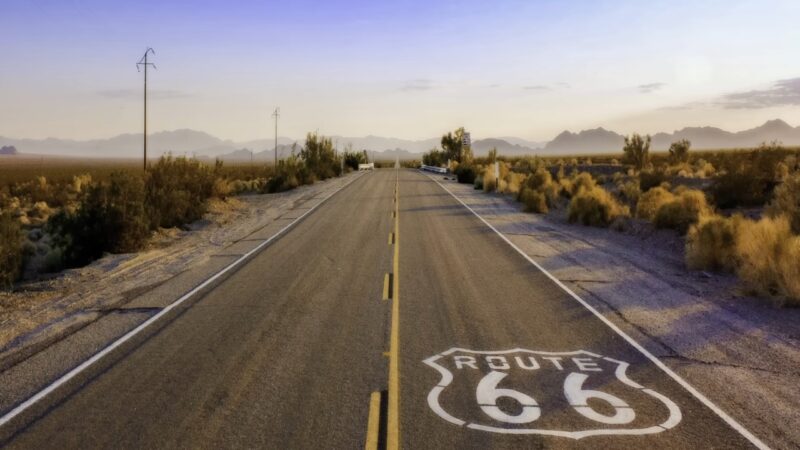
On November 11, 2026, Route 66 turns 100 years old. Remarkably, about 85% of the historic highway remains drivable, according to the National Park Service, even though the United States officially removed it from the federal highway system in 1985.
That means much of the road connecting Chicago to Southern California survives, passing through small towns, former trading posts, old motels, and stretches of countryside that modern interstate travelers rarely see.
I find the survival of Route 66 more interesting than its considerable fame. America spent decades building faster highways that made the old road unnecessary, yet people now travel thousands of miles specifically to drive it.
The centennial offers a good reason to understand how that happened, and why the surviving road is worth experiencing.
A Highway That Changed How Americans Traveled
Route 66 officially entered the national highway system on November 11, 1926, when the American Association of State Highway Officials approved the country’s numbered highway network.
Did you ever drive Route 66? First designated in 1926, this Chicago to Santa Monica highway was a major route westward. By the 1980s, however, the road had largely been replaced by the federal interstate highway system.
This newspaper article was published when the historic highway was decertified in June 1985.
Learn more about the history of Route 66 in our new blog post: https://t.co/swXRysf30S
Or see this article in the Fort Lauderdale News on our site. https://t.co/0Tp5WeAG3M
— Newspapers.com (@_newspapers) June 26, 2026
The roughly 2,448-mile route connected Chicago with Los Angeles, crossing eight states: Illinois, Missouri, Kansas, Oklahoma, Texas, New Mexico, Arizona, and California.
Before Route 66, long-distance automobile travel required considerable patience. Roads were frequently unpaved, poorly marked, and disconnected from reliable services.
The new highway wasn’t constructed entirely from scratch. Existing roads were connected under one recognizable number, creating a practical route across much of the country.
According to the National Park Service’s historical account, Route 66 wasn’t completely paved until 1938.
The highway became particularly important during the Great Depression, when families displaced by economic hardship and the Dust Bowl traveled west seeking work. John Steinbeck famously called it the “Mother Road” in his 1939 novel The Grapes of Wrath.
After World War II, its identity changed again. More Americans owned cars, families took vacations, and roadside businesses multiplied. Motor courts, diners, filling stations, and increasingly elaborate advertising signs became fixtures along the highway.
Route 66 helped create a distinctly American roadside culture, where the journey itself could be part of the attraction.
What Does 85 Percent Still Drivable Actually Mean?
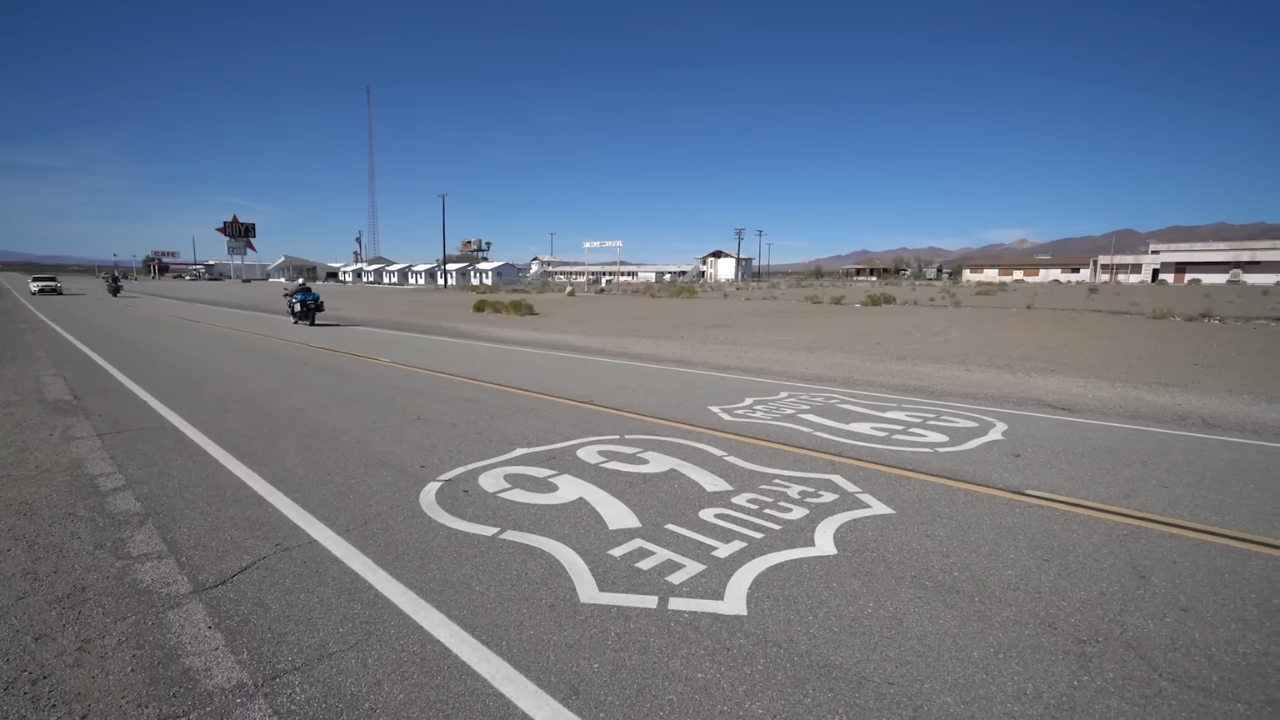
The surviving 85% is impressive, although it needs some explanation. Route 66 is no longer one continuously numbered federal highway. Surviving sections operate as state highways, local streets, frontage roads, and designated historic routes.
Some sections retain their original pavement and alignment. Others were widened, rebuilt, rerouted, or incorporated into newer transportation networks.
A traveler attempting to follow the historic route will occasionally need to use modern highways to connect surviving sections.
There’s another complication. Route 66 changed its alignment several times during its operational history. Depending on which historical version you’re following, the route can look different.
I wouldn’t become too concerned about driving every surviving foot of pavement. That turns an interesting historical journey into an exercise in navigation.
The more worthwhile approach is to seek out stretches where the original relationship between the road, its communities, and the surrounding landscape remains visible.
And there are still plenty of them.
How Route 66 Survived Its Own Replacement
The interstate highway system gradually made Route 66 obsolete.
Modern highways offered wider lanes, higher speeds, and routes that avoided congested town centers. For drivers interested in reaching California efficiently, the advantages were obvious.
For roadside communities, the consequences were considerably less attractive.
Businesses depended on passing motorists. When interstate traffic bypassed a town, gas stations, restaurants, and motels could lose much of their customer base almost immediately.
Elsewhere in America, Leavenworth, Washington, faced a similar economic crisis after its railroad and timber industries declined. The town eventually reinvented itself as a Bavarian-themed tourist destination.
The final section was bypassed near Williams, Arizona, in 1984. Route 66 was officially decommissioned in 1985.
Yet its disappearance from official highway maps encouraged something unexpected: preservation.
Official decisions don’t always erase established traditions. South Korea’s 2023 age reform provides another example, as the new law changed official ages without immediately replacing familiar social customs.
Residents, historical associations, and local governments began recognizing the cultural value of what remained.
Old businesses were restored, historic road signs returned, and travelers increasingly sought the slower route that earlier generations had been eager to replace.
There’s an irony here worth appreciating. The interstate system nearly destroyed Route 66’s roadside economy, but it also helped preserve sections of the road by removing the heavy traffic that once wore them down.
Preservation still requires substantial work. Historic buildings deteriorate, bridges need repairs, and smaller communities cannot always finance restoration independently.
The National Park Service’s preservation program has supported historic properties and community projects along the corridor. Keeping the road alive involves considerably more than repainting its famous shield.
Where Can You Still Experience the Original Route 66?
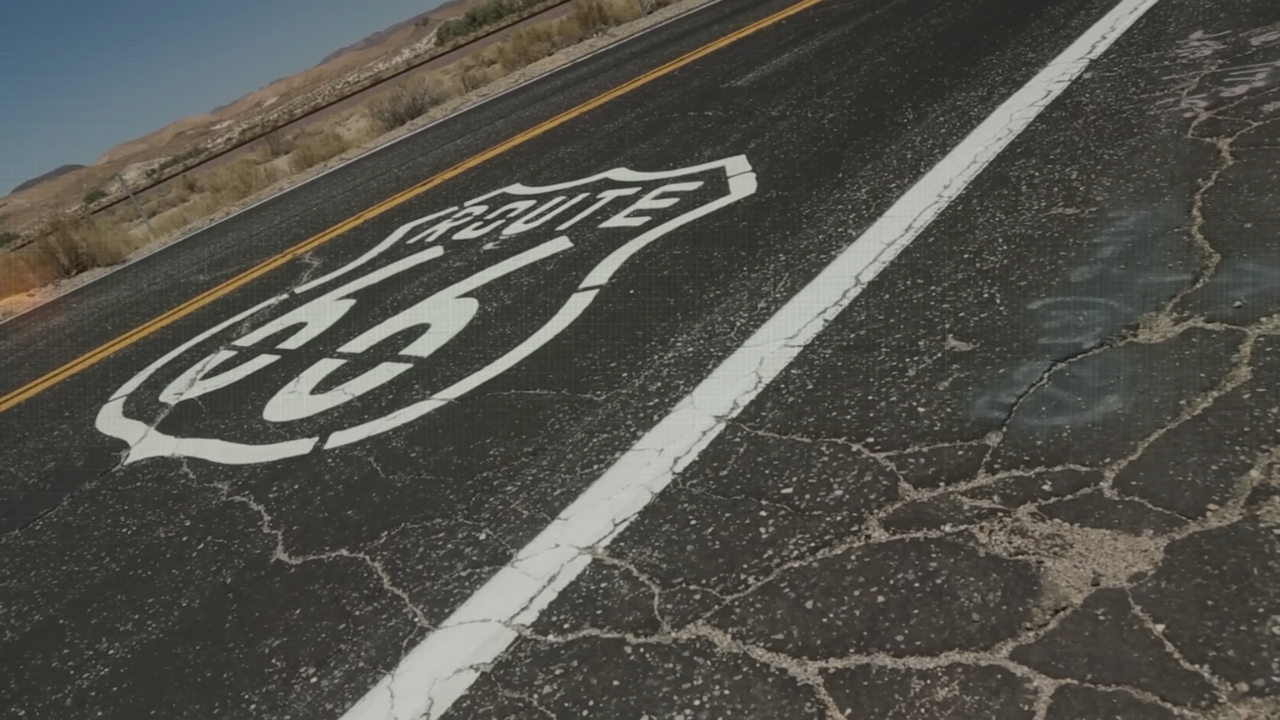
Not every surviving section offers the same experience. Some preserve the scenery, others the architecture, and a few retain enough of both to make the historical connection particularly convincing.
Here are several places I would prioritize.
Illinois: The Road’s Midwestern Beginnings
Illinois offers an accessible introduction to Route 66, particularly around Springfield and the smaller towns heading southwest.
Historic service stations, roadside restaurants, and surviving road alignments illustrate how the highway functioned before interstate travel.
I think Illinois deserves more attention than it generally receives. The desert landscapes of the Southwest make better postcards, certainly, but the highway’s early development makes more sense when you see the agricultural communities it originally connected.
Oklahoma: Roadside Architecture and Small-Town History
View this post on Instagram
Oklahoma contains approximately 400 miles of historic Route 66 and several particularly memorable roadside landmarks.
The Blue Whale of Catoosa and the historic Arcadia Round Barn are good examples of the unusual architecture associated with the route.
According to the National Park Service, Oklahoma also played an important role in the highway’s creation through Tulsa businessman Cyrus Avery, widely recognized as the Father of Route 66.
For me, Oklahoma offers an especially interesting combination of transportation history and the roadside creativity that developed around automobile tourism.
Arizona: One of the Best Surviving Drives
Arizona contains some of the most satisfying sections for travelers who want to spend meaningful time on the original highway.
The 85-mile stretch of State Route 66 between Seligman and Kingman largely escaped absorption into Interstate 40, according to the Arizona Department of Transportation.
Here, motorists travel through broad desert landscapes and small communities without constantly returning to a modern interstate.
Seligman is particularly associated with the movement to preserve historic Route 66.
If I were choosing just one region to experience the road’s original character, northern Arizona would be near the top of my list.
California: Across the Mojave Desert
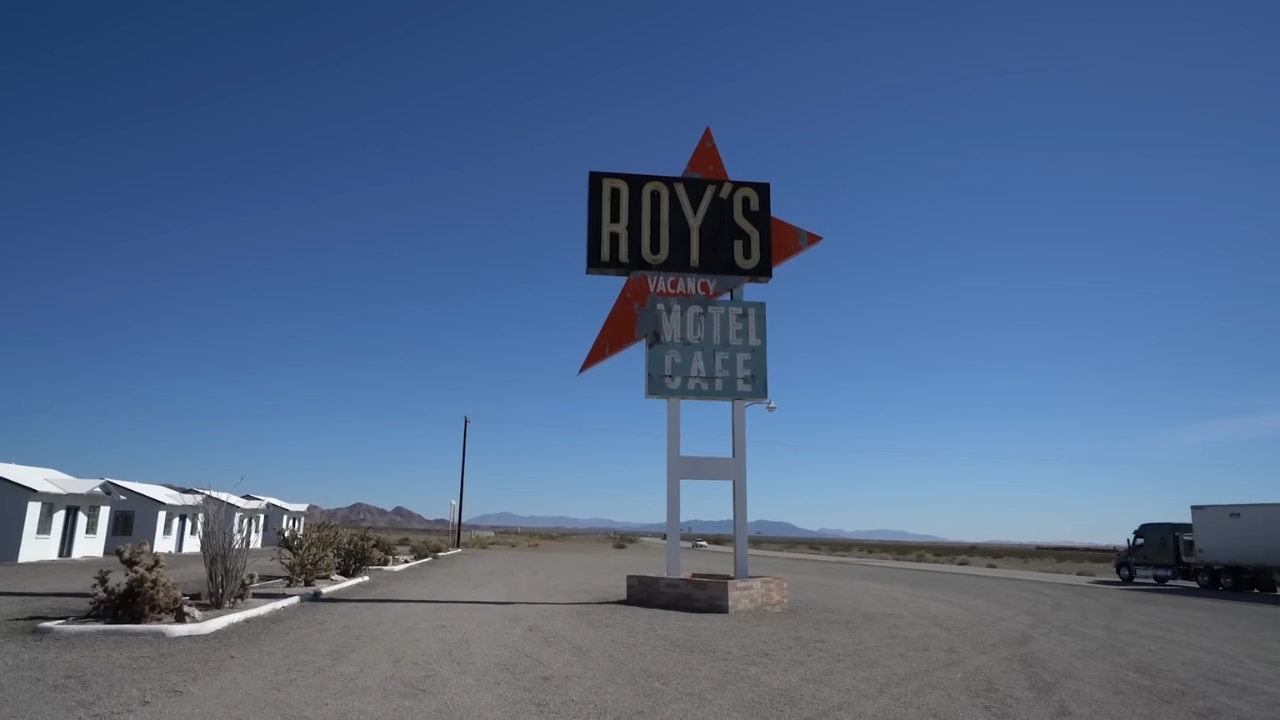
California’s surviving highway sections provide a different experience.
The Mojave Desert reveals how isolated and demanding cross-country motoring once was. Places such as Amboy developed around the need for fuel, food, and accommodation.
Roy’s Motel and Café remains one of the area’s best-known roadside landmarks, and its preservation has received National Park Service grant support.
The landscape itself explains much of the road’s history. Before modern vehicles and dependable services, crossing this region required serious planning.
Even today, carrying adequate water, monitoring temperatures, and checking fuel availability are sensible precautions.
Similar precautions apply to Australia’s remote outback roads. Our Coober Pedy travel guide covers the long drive along the Stuart Highway and what visitors should know before reaching the underground town.
The History Isn’t Entirely Romantic
Route 66 is frequently celebrated as a symbol of American freedom. That interpretation is understandable, although it doesn’t describe everyone’s experience.
During segregation, Black travelers faced discrimination at restaurants, hotels, and service stations along the highway.
Many relied on the Negro Motorist Green Book, published between 1936 and 1964, to identify establishments where they could safely obtain services.
The National Park Service has documented these businesses and their importance to Black motorists.
I think any serious celebration of Route 66 should acknowledge that history. The road represents extraordinary changes in mobility, but access to that mobility was never equally enjoyed.
Preserving its less comfortable stories makes the highway historically richer, not less worthy of celebration.
Planning a Route 66 Road Trip in 2026
@paynelife America… I think you might have convinced me what our next big trip needs to be. 🇺🇸 We’ve talked about road trips, road trip snacks, small-town America and all the places tourists normally miss. But somehow we’ve never done the biggest one… ROUTE 66. And I’ve just realised that 2026 is actually the 100th anniversary of Route 66. 😳 As a Brit who genuinely loves seeing the America beyond the tourist attractions, this sounds right up our street. So America, I need you to plan it for us. If we drive Route 66, what’s the ONE stop we absolutely cannot miss? 👇 #Route66 #America #RoadTrip #SmallTownAmerica #BritishInAmerica ♬ original sound – Payne Life
The centennial has brought renewed attention to Route 66, with exhibitions, community celebrations, and special events taking place throughout 2026.
Travelers can find upcoming activities through the official Route 66 Centennial calendar. For a road trip, I would recommend the following approach:
- Allow two to three weeks for the complete route. You can cover the distance faster, but that misses much of what makes Route 66 interesting.
- Choose a shorter section if time is limited. Three to five days in Arizona or Oklahoma can provide a more rewarding experience than rushing through eight states.
- Use a dedicated historic Route 66 map. Ordinary navigation apps usually prioritize faster interstate routes.
- Check road conditions and seasonal weather. November brings the possibility of snow and freezing conditions in higher-elevation areas, including northern Arizona and New Mexico.
- Support locally owned businesses. Independent cafés, motels, museums, and shops are an important part of what makes the historic route worth preserving.
My strongest recommendation is to avoid planning the journey around a checklist of roadside attractions alone.
Stop in the smaller communities. Visit local museums. Take the older road through town instead of automatically following the bypass.
The famous signs are enjoyable, but the communities behind them tell the more interesting story.
Route 66 at 100 Is About More Than Nostalgia
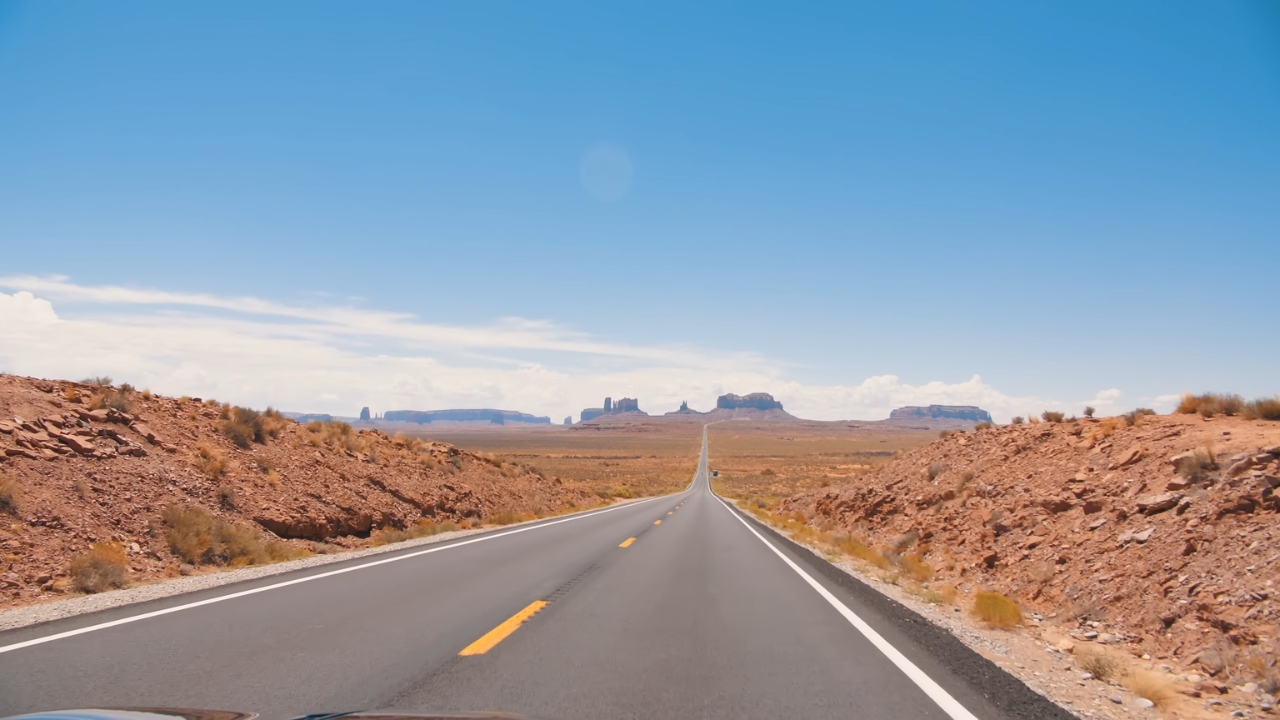
A century after its official designation, Route 66 remains one of America’s most recognizable roads, despite having spent more than four decades outside the federal highway system.
Its survival says something interesting about how transportation changes our relationship with places.
Far north of Route 66, Whittier, Alaska, relies on a one-lane tunnel shared with trains as its only road access. The tunnel’s timetable shapes every journey into and out of town.
The same highway that once represented modernity eventually became outdated. Now, its slower pace is precisely what attracts visitors.
Norway’s Atlantic Road followed a different path. Built for everyday travel in 1989, it later gained international fame because of a bridge that appears to drop into the sea.
I don’t think Route 66 needs to be frozen in 1955 to remain meaningful. Its towns are living communities, not historical exhibits, and their futures matter as much as their pasts.
Beyond the Route 66 corridor, Monowi, Nebraska, offers another example of a small American town determined to preserve its community despite decades of population decline.
The real achievement of the centennial isn’t that approximately 85% of the road remains drivable. It’s that people still consider the places along it worth stopping for.